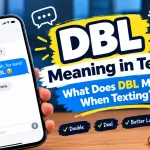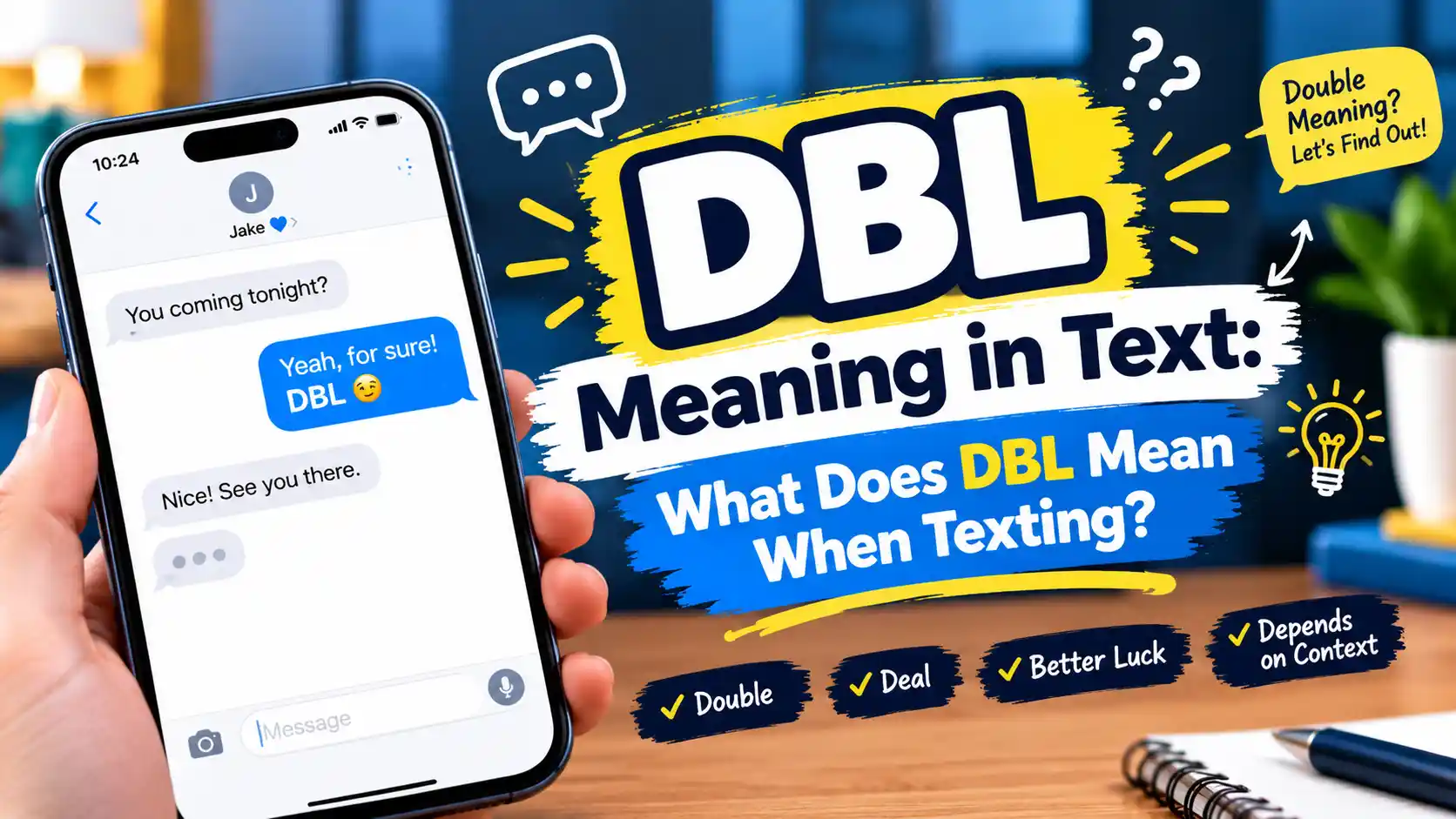
A friend texts, “meeting at 7, dbl!” before you head out for the night. A few days later, someone in a gaming lobby types, “dbl kill, let’s go!” Same three letters, doing two very different jobs.
DBL is a flexible little abbreviation that shows up in texting, gaming chat, social media captions, and group planning, shifting meaning depending entirely on the situation. It doesn’t have one single, fixed definition the way some abbreviations do; instead, it borrows its meaning from whatever it’s attached to.
Understanding DBL matters because guessing wrong can genuinely change how you read a message, especially the difference between a friendly reminder and a comment about scoring or repetition. This guide breaks down the most common meanings of DBL, where this kind of shorthand comes from, and how to tell them apart quickly.
Definition & Meaning
DBL most commonly stands for “Double.”
It’s used to describe something happening twice, being duplicated, or being emphasized, and shows up across gaming, sports, social media, and everyday texting.
Example:
Text: just scored a dbl on my last round, feeling good
Here, DBL simply means “double,” referring to scoring twice in a row.
A second common meaning, especially in casual texting about plans, is “Don’t Be Late.”
Friend 1: see you at the restaurant at 7 Friend 2: dbl! I’m not waiting around again 😂
Here, DBL works as a quick, friendly (or slightly teasing) reminder about punctuality.
Beyond these two dominant meanings, DBL has a few additional, context specific uses that show up depending on the platform or community:
- “Don’t Be Lazy” is a playful, motivating nudge to get moving on something.
- “Don’t Be Long” asking someone not to take too much time before returning.
- “Died By Laughing” / “Death By Laughter” an exaggerated way of saying something was extremely funny, similar to LOL or ROFL.
- In gaming communities specifically, DBL can also mean “Death By Lag,” describing frustration with a slow or lagging connection during play.
More real life examples:
Text: class starts at 9 sharp, dbl
Comment: that video had me dbl 😂😂
Gaming chat: ugh, dbl again, this connection is unplayable
Context makes the correct meaning fairly clear. A message about plans or timing usually points to “don’t be late.” A comment reacting to something funny usually points to “died by laughing.” A gaming complaint about lag points to “death by lag.” And references to scores, points, or repetition point to the original, most established meaning: “double.”
The short version: DBL is a flexible abbreviation that shifts meaning based on context, with “double” being its most traditional and widely recognized definition, and “don’t be late” being one of its most common casual texting uses today.
Background & History
DBL’s oldest and most established meaning, “double,” predates modern texting slang entirely. Abbreviating “double” to “dbl” has long been common in written shorthand across sports scoring, forum posts, and casual note taking, simply as a quicker way to write a frequently used word. Early internet forums used “dbl” specifically to flag accidental double posting, a practical, functional use that has nothing to do with playful slang at all.
As texting culture grew through the 2000s and 2010s, people began adapting DBL for new, more casual purposes, following the same shorthand logic that shaped countless other abbreviations. “Don’t be late” likely emerged as a natural fit, since reminding someone about punctuality is such a common part of everyday planning texts, and compressing that phrase into a quick three letter abbreviation matched a broader trend of shortening frequent, practical phrases.
The “died by laughing” meaning developed alongside a long tradition of exaggerated laughter abbreviations, sitting in the same family as terms like LOL, LMAO, and ROFL all of which use dramatic, hyperbolic language to express genuine amusement.
The gaming specific meaning, “death by lag,” grew directly out of online gaming culture, where connection issues and lag are a constant, shared frustration. This usage plays on the letters DBL sounding similar to “double,” while giving it an entirely new, community specific meaning tied to a very particular kind of gaming annoyance.
Because DBL has developed so many separate, context driven meanings rather than settling into one dominant definition, it remains a genuinely flexible term. Different communities gamers, texters coordinating plans, social media commenters have each shaped their own primary use for it, and none of these meanings has fully overtaken the others.
Today, DBL commonly appears in:
- Sports, scoring, and forums, using its original meaning of “double”
- Texting between friends and family, especially around plans, often meaning “don’t be late”
- Social media comments, reacting to something funny
- Gaming chat, referencing lag frustration or in game double kills/scores
Usage in Various Contexts
In texting about plans (don’t be late):
Friend 1: dinner reservation is at 7:30 Friend 2: got it, dbl this time please 😂
In gaming chat (double, as in score or kill):
Teammate: nice dbl kill back there You: thanks, finally timed it right
In gaming chat (death by lag):
Player 1: why do you keep disconnecting mid match Player 2: dbl, this connection is unbearable tonight
On social media (died by laughing):
Comment: dbl 😂😂 this video is too much
In casual group chats (don’t be lazy):
Friend 1: dbl, go finish your assignment already Friend 2: okay okay, I’m on it
In forums or repeated posting contexts (double, original sense):
Forum comment: sorry, dbl post, my connection glitched
Across these settings, context does most of the work in clarifying which meaning applies. Messages about timing or plans usually mean “don’t be late.” Gaming chat leans toward “double” (as in score) or, when frustration is involved, “death by lag.” Reactions to funny content point to “died by laughing.” Forum or repetition related comments point back to the original, simple meaning of “double.”
Common Misconceptions & Clarifications
Misconception 1: DBL has one single, fixed meaning. It doesn’t. Unlike more standardized abbreviations, DBL shifts meaning significantly depending on the platform, community, and context.
Misconception 2: DBL always means “double.” While this is its oldest and most traditional meaning, casual texting today often uses it to mean “don’t be late,” especially around planning and logistics.
Misconception 3: Using DBL to remind someone to be on time is always harmless. Tone and relationship matter here. Sending “dbl” to someone you don’t know well, or before a first meetup, could come across as presumptuous or slightly controlling, especially if they haven’t actually been late before.
Misconception 4: DBL is a newer, trend driven term. Its core meaning as “double” is actually quite old, tied to sports scoring and forum shorthand long before more playful texting meanings developed.
Misconception 5: DBL means the same thing across every platform. It doesn’t. Gaming communities, texting between friends, and social media comment sections have each shaped somewhat different primary uses for the term.
Clarification on context: because DBL carries so many possible meanings, reading the full message or situation is really the only reliable way to know which one applies. A gaming lobby, a planning text, and a funny video comment will each likely use DBL differently.
Similar Terms & Alternatives
| Term | Meaning | Typical Use |
| DBL | Double / Don’t Be Late / Died By Laughing / Death By Lag | Texting, gaming, sports, social media |
| 2X | Double / times two | Gaming, sports, sales promotions |
| LOL / LMAO | Laughing reactions | General amusement |
| DBD | “Don’t Be [something else]” family variants | Less common alternative phrasing |
| PING | Connection delay reference | Gaming specific, technical |
| ETA | Estimated Time of Arrival | Coordinating plans and timing |
Examples in use:
Text: ETA 15 minutes, on my way!
Gaming chat: my ping is terrible tonight
Comment: lmao this is too good
These related terms overlap with some of DBL’s functions, especially around gaming frustrations (ping) and coordinating timing (ETA).
How to Respond to This Term
How you respond to “dbl” depends entirely on which meaning applies.
If it means “don’t be late” casual response:
“haha noted, I’ll actually be on time this time”
Funny response:
“wow, no faith in me at all 😂”
If it means “double” (score/points) casual response:
“nice! that’s awesome”
If it means “death by lag” sympathetic response:
“ugh, that’s the worst, hope it clears up”
If it means “died by laughing” casual response:
“right?? I couldn’t stop laughing either”
Professional response (rare, but possible in a lightly casual context):
“Got it, I’ll make sure to be on time.”
General tips for responding:
- If the message is about plans or timing, treat DBL as a lighthearted reminder rather than a serious accusation.
- In gaming chat, quickly check whether the conversation is about scoring or connection issues to know which meaning fits.
- If the meaning feels unclear, it’s fine to ask directly: “dbl as in double, or are you telling me not to be late? 😄”
Regional or Cultural Differences
DBL’s original meaning, “double,” is recognized broadly across English speaking regions and industries, including sports, gaming, and business, without much regional variation, since it’s tied to a simple, universal English word.
Its more casual texting meanings particularly “don’t be late” are most common in everyday English language texting across the US, UK, Canada, and Australia, following the same general pattern as other practical, planning related abbreviations.
Some notes worth considering:
- According to some sources, there are no strong regional differences in how DBL is used, though age plays a bigger role younger texters tend to be more comfortable with the abbreviation, while older readers may find it unclear without context.
- In gaming communities specifically, “death by lag” is recognized internationally among online gamers, regardless of a player’s specific country, since lag frustration is a shared, universal gaming experience.
- Non-English speaking online communities sometimes adopt casual English abbreviations like DBL directly, especially in gaming spaces where English often serves as a common shared language.
Comparison with Similar Terms
| Term | Core Meaning | Platform | Tone |
| DBL (double) | Twice, duplicated | Sports, gaming, forums | Neutral, factual |
| DBL (don’t be late) | Punctuality reminder | Texting, planning | Friendly or lightly teasing |
| DBL (died by laughing) | Extreme amusement | Social media comments | Playful, exaggerated |
| DBL (death by lag) | Gaming connection frustration | Gaming chat | Frustrated, informal |
| ETA | Estimated arrival time | Texting, planning | Neutral, practical |
The clearest way to separate DBL’s meanings is platform and topic. Sports and forum contexts point to “double.” Planning texts point to “don’t be late.” Gaming complaints point to “death by lag.” And reactions to funny content point to “died by laughing.”
Usage in Online Communities & Dating Apps
On Instagram and TikTok, DBL often appears in comments reacting to funny content, using the “died by laughing” sense, though it can occasionally reference “double” in the context of likes or engagement.
On Tinder and other dating apps, DBL is less common overall, but if it appears, it’s more likely tied to planning logistics:
Match: let’s meet at the coffee shop at 5 You: sounds good, dbl though, I hate waiting around lol
Because DBL used this way (as a reminder) can come across as presumptuous with someone you’ve just met, it’s generally better reserved for people who already know your texting style, or used lightly and self-deprecatingly rather than directed at the other person.
In gaming communities, DBL is extremely common, most often referring to either a double kill/score or, in frustration, “death by lag”:
Teammate: nice dbl there, that was clean You: thanks, finally got the timing right
Tips for responding appropriately:
- On dating apps, avoid sending “dbl” (meaning don’t be late) to someone you’re meeting for the first time, since it can come across as controlling before they’ve done anything wrong.
- In gaming chat, quickly reading the surrounding conversation clarifies whether DBL refers to a score or a lag complaint.
- On social media, DBL in the comments is usually a low stakes, playful reaction rather than something requiring a detailed response.
Hidden or Offensive Meanings
DBL does not carry any inherently offensive or explicit meaning across its common uses. Its various meanings double, don’t be late, die by laughing, death by lag are all neutral or lighthearted.
A few points are worth understanding about tone and context:
- “Don’t be late” can come across as presumptuous in the wrong context. Sending it to someone before a first meetup, or to someone who has never actually been late, might unintentionally feel controlling or make assumptions about their reliability.
- Its meaning depends heavily on relationship and familiarity. Among close friends who already joke about punctuality, DBL feels playful. With someone new, it can land differently.
- No hidden negative meaning exists beyond the tone risk described above. DBL remains safe and appropriate across nearly all casual contexts when used thoughtfully.
In short, DBL is generally safe and casual, with its main consideration being making sure the “don’t be late” meaning doesn’t come across as controlling with someone you don’t know well yet.
Suitability for Professional Communication
DBL is not suitable for professional or formal communication in any of its casual meanings. It’s informal shorthand that relies on the reader already understanding the internet and texting slang.
Why it doesn’t fit well:
- Its meaning shifts significantly depending on context, which creates real risk of misunderstanding in professional settings.
- Reminding a colleague or client not to be late using “dbl” would read as unprofessional; spelling out the request directly is far more appropriate.
Professional alternatives:
| Instead of “dbl” | Use |
| Reminding someone about punctuality | “Please arrive on time.” / “Looking forward to seeing you at [time].” |
| Referring to doubles (score, points, etc.) | “Double” (spelled out fully) |
| Reacting to something funny | “That’s really funny!” |
Example rewrite:
Casual: “meeting at 2, dbl” Professional: “Please plan to arrive on time for our 2 PM meeting.”
FAQs
1. What does DBL mean in a text message? It most commonly means “Double” or “Don’t Be Late,” depending on context. It can also mean “Died By Laughing” or, in gaming, “Death By Lag.”
2. Is DBL always about being on time? No, that’s just one common meaning. In gaming and sports contexts, it usually means “double,” referring to a score or repeated action.
3. What does DBL mean in gaming specifically? It can mean a “double” kill or score, or “death by lag,” referring to frustrating connection issues during a match.
4. Is it rude to send “dbl” to someone before meeting them? It can come across as presumptuous or slightly controlling, especially with someone new or if they haven’t actually been late before. It’s better suited for close friends who already joke about punctuality.
5. Can DBL be used at work? No, it’s too informal and context dependent for professional communication. Spelling out the intended meaning is much clearer.
6. Is DBL the same as “died by laughing”? That’s one of its meanings, particularly in social media comments reacting to something funny, similar to LOL or ROFL.
7. How do I know which meaning of DBL applies? Look at the context. Planning texts usually mean “don’t be late,” gaming chat usually means “double” or “death by lag,” and reactions to funny posts usually mean “died by laughing.”
Conclusion
DBL is a flexible abbreviation whose meaning depends heavily on context. Its oldest, most established meaning is simply “Double,” used across sports, gaming, and forums. In everyday texting, it often means “Don’t Be Late,” a quick, casual reminder about punctuality, while on social media it can mean “Died By Laughing,” and in gaming communities specifically, it sometimes means “Death By Lag.”
Because its meaning shifts so much by platform and situation, context is essential when reading or using DBL. While it fits naturally into casual texting, gaming chat, and social media comments, it’s best avoided in professional communication, where spelling out the intended meaning remains the clearer, safer choice.

Asfan Wahab is a content creator and writer focused on text meanings, slang, abbreviations, acronyms, and internet expressions. Through Orvexale.com, he provides clear and simple explanations to help readers understand modern texting language. His goal is to make confusing terms easy to understand with practical examples and everyday context.