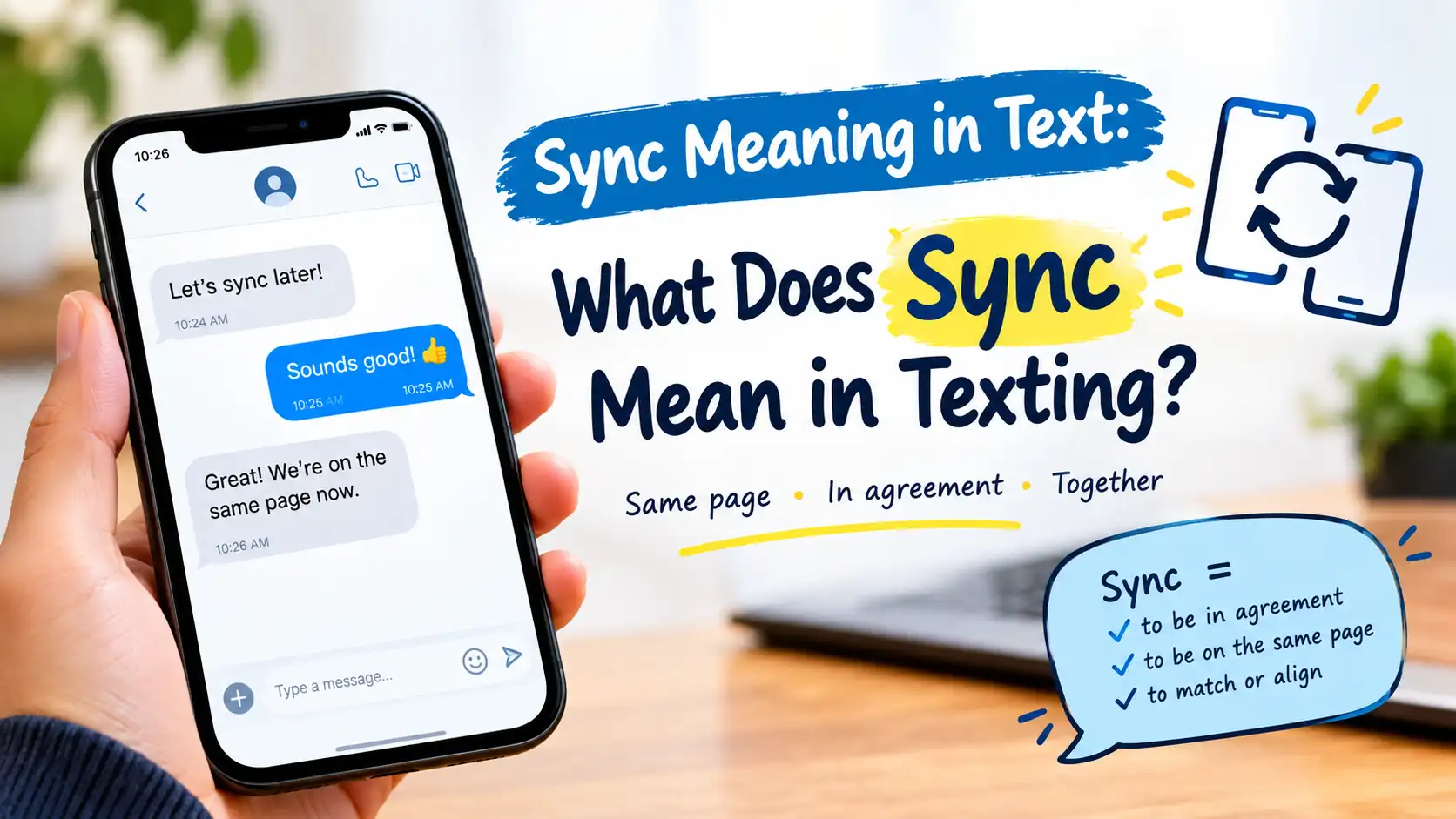
Have you ever seen someone write “sync” in a text message and wondered what it means? The word sync is common in texting, social media, gaming, apps, and everyday conversations. In most cases, it means to be in agreement, to match, or to make things work together at the same time.
For example, someone might text, “Let’s sync later,” meaning “Let’s talk later and make sure we are on the same page.” A friend might say, “Our schedules are not synced,” meaning their schedules do not match.
The word can also describe technology. When your phone syncs with your computer, information such as contacts, photos, calendars, or files can be updated across both devices.
Understanding sync meaning in text is useful because the word can have slightly different meanings depending on the situation. In casual messages, it may simply mean “agree” or “coordinate.” In technology, it usually means keeping information or devices updated and matched.
Definition & Meaning of Sync

Sync is a short form of synchronization or synchronization. To synchronize means to make two or more things happen together, match each other, or stay updated with each other.
In texting, however, people often use sync in a shorter and more casual way.
Simple meaning of sync
Depending on the context, sync can mean:
- Match
- Agree
- Coordinate
- Stay updated
- Work together
- Be on the same page
- Happen at the same time
For example:
Person 1: “Can we sync before the meeting?”
Person 2: “Sure. Let’s talk at 9.”
Here, “sync” means talk and make sure both people understand the plan.
Another example:
Person 1: “Are you synced with Sarah about the project?”
Person 2: “Yes, we discussed everything yesterday.”
In this case, “synced” means in agreement or up to date with Sarah.
Sync in technology
The meaning changes slightly when technology is involved.
For example:
“My phone is synced with my laptop.”
This means the two devices are connected so that certain information can stay updated between them.
You may also see:
“Sync your contacts.”
This means your contacts should be updated or copied between an account and a device.
Sync as a verb
“Sync” can be used as a verb:
“Let’s sync tomorrow.”
It can also be used in the past tense:
“We synced about the project.”
Or as an adjective-like expression:
“We are in sync.”
This means people or things are working well together or thinking similarly.
So, when someone uses “sync” in a text, always look at the surrounding words to understand the exact meaning.
Background & History of the Term Sync

The word sync comes from synchronize, which comes from the Greek word synchronos. The Greek roots relate to the idea of things happening at the same time.
The full word “synchronize” has been used for a long time in areas such as science, music, communication, and technology.
Over time, the shorter form sync became popular.
Technology played a major role in making the word common in everyday language. Computers, phones, cloud services, calendars, email accounts, and other digital tools often need to keep information synchronized.
For example, when you add a contact to your phone and it later appears on another device, the devices or accounts may be syncing.
The word then moved beyond technology.
People started using “sync” as a simple business and communication term.
Instead of saying:
“We should have a conversation to make sure that our plans are aligned.”
Someone might simply say:
“Let’s sync.”
This shorter expression became especially popular in workplaces, online teams, and professional communication.
Today, “sync” is used in many different areas, including:
- Text messaging
- Social media
- Business communication
- Video calls
- Gaming
- Mobile apps
- Cloud storage
- Music
- Movies
- Sports
- Dating conversations
- Casual conversations
The basic idea has remained the same: two or more things need to match, connect, coordinate, or happen together.
However, the exact meaning depends on context.
In technology, it often means keeping data updated.
In conversation, it often means communicating or coordinating.
A relationship, it may mean being emotionally or mentally aligned.
Usage in Various Contexts
The word sync can appear in many types of conversations.
Sync in texting
In normal texting, “sync” often means talking about something so everyone understands the same plan.
Person 1: “Can we sync about tomorrow?”
Person 2: “Yes, what time?”
Here, it means coordinate or discuss.
Another example:
“I need to sync with you before I reply.”
This means the person wants to talk first.
Sync on social media
People may use the word when discussing posts, videos, trends, or content.
For example:
“The music is perfectly synced with the video.”
This means the music and video match in timing.
Someone might also say:
“Our posts are not synced.”
This could mean the posts are not coordinated.
Sync in gaming
Gaming uses the word frequently.
Players may say:
“We need to sync our attacks.”
This means they need to perform their actions at the right time.
Another example:
Player 1: “Wait for me.”
Player 2: “Okay, let’s sync our moves.”
Here, “sync” means coordinate actions.
Sync in casual conversations
A person may say:
“We are totally in sync.”
This means they understand each other or think alike.
For example:
Friend 1: “I was just about to order pizza!”
Friend 2: “Same! We are so in sync.”
Here, “in sync” means having the same idea at nearly the same time.
Sync in work conversations
At work, “sync” often means a short discussion or meeting.
“Let’s sync tomorrow morning.”
This usually means:
“Let’s have a quick conversation tomorrow morning to discuss the situation.”
Common Misconceptions & Clarifications
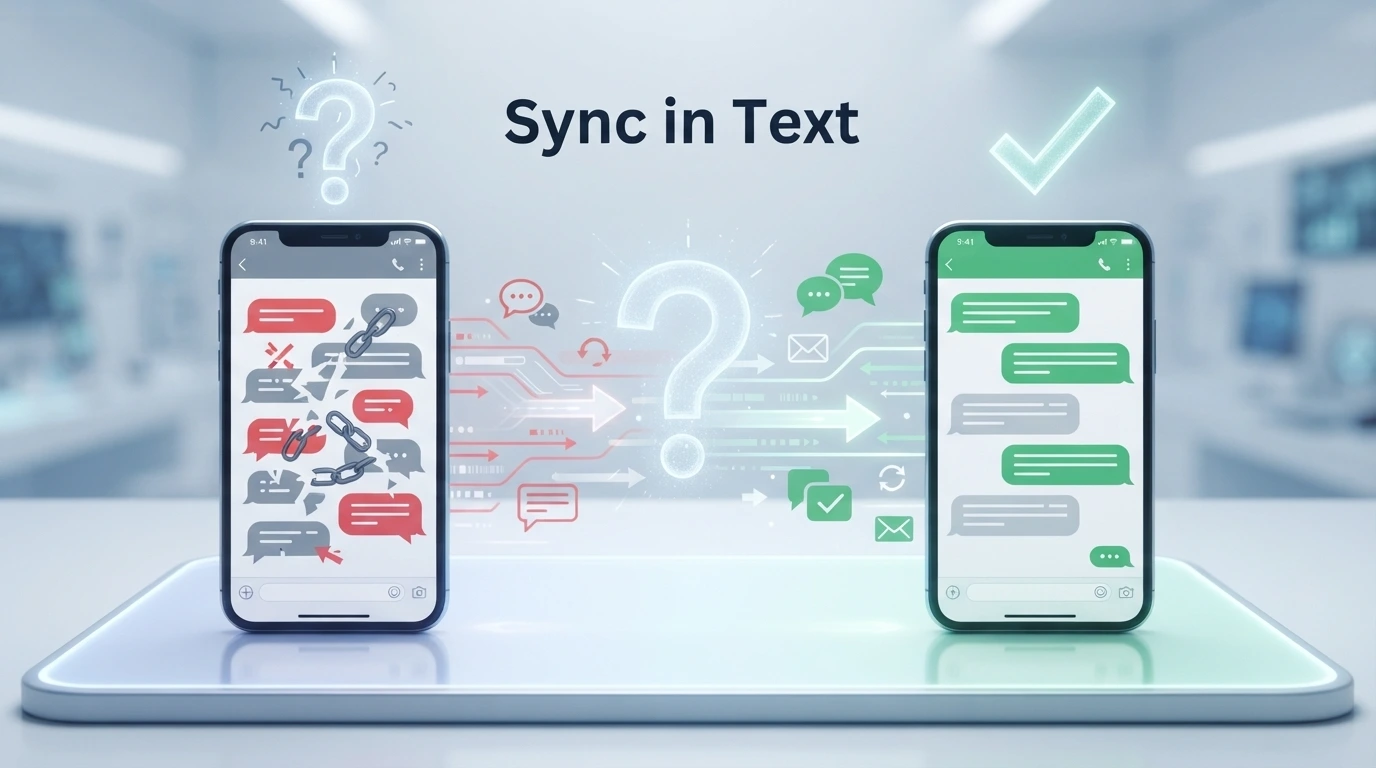
One common misunderstanding is thinking that sync always refers to technology.
That is not true.
Although “sync” is strongly associated with phones, computers, apps, and cloud services, it is also widely used in normal conversation.
For example:
“We need to sync before the event.”
This does not necessarily involve a computer. It may simply mean coordinate plans.
Another misconception is that “sync” always means complete agreement.
Sometimes it only means that people are communicating and becoming aligned.
For example:
“Let’s sync on the details.”
This does not necessarily mean the people already agree. It means they want to discuss the details and make sure everyone understands them.
“Sync” does not always mean friendship
If someone says:
“I need to sync with John.”
It does not automatically mean John is a close friend. It may simply mean they need to communicate.
“Sync” is usually not offensive
The word itself is normally neutral.
However, tone and context can change how a message feels.
For example:
“We need to sync.”
can sound professional.
But:
“You clearly aren’t in sync with reality.”
can sound insulting because the speaker is criticizing someone.
Therefore, the surrounding words matter.
Similar Terms & Alternatives
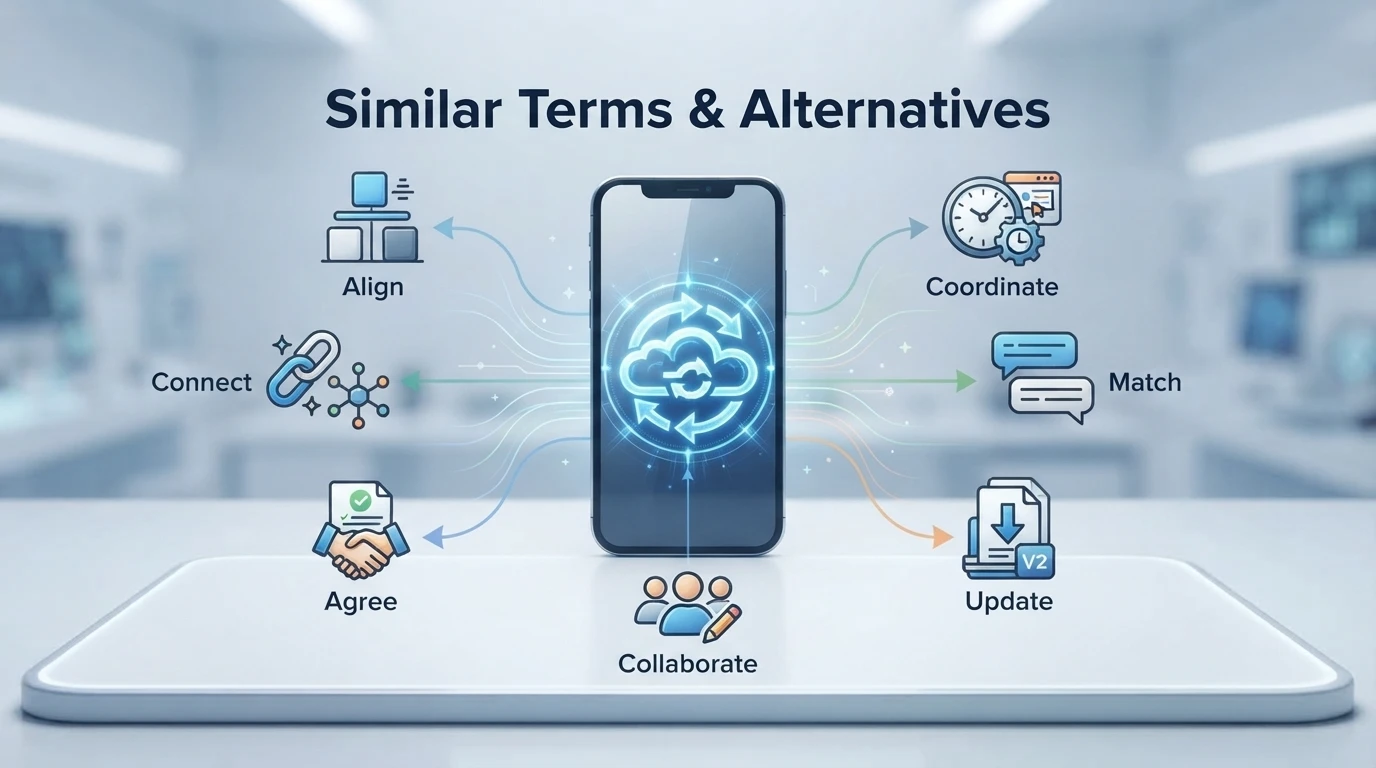
Several words can have a meaning similar to sync.
| Term | Basic Meaning | Common Context |
| Sync | Match or coordinate | Texting, work, technology |
| Align | Agree or match plans | Business, professional |
| Coordinate | Organize actions | Work, events |
| Connect | Communicate or link | Casual, social |
| Match | Be similar | General conversation |
| Agree | Have the same opinion | Everyday conversation |
| Update | Make information current | Technology |
| Collaborate | Work together | Professional settings |
| Communicate | Exchange information | General |
| Harmonize | Work together smoothly | Music, ideas, relationships |
Sync vs. align
Sync is often more casual.
Align sounds more professional.
Example:
Casual: “Let’s sync about the project.”
Professional: “Let’s align on the project goals.”
Both can communicate a similar idea.
Sync vs. coordinate
“Coordinate” focuses more on organizing actions.
“We need to coordinate our schedules.”
“Sync” can be broader.
“Let’s sync about our schedules.”
Sync vs. agree
“Agree” means having the same opinion.
“Sync” can mean agreement, but it can also mean simply getting on the same page.
How to Respond to “Sync”
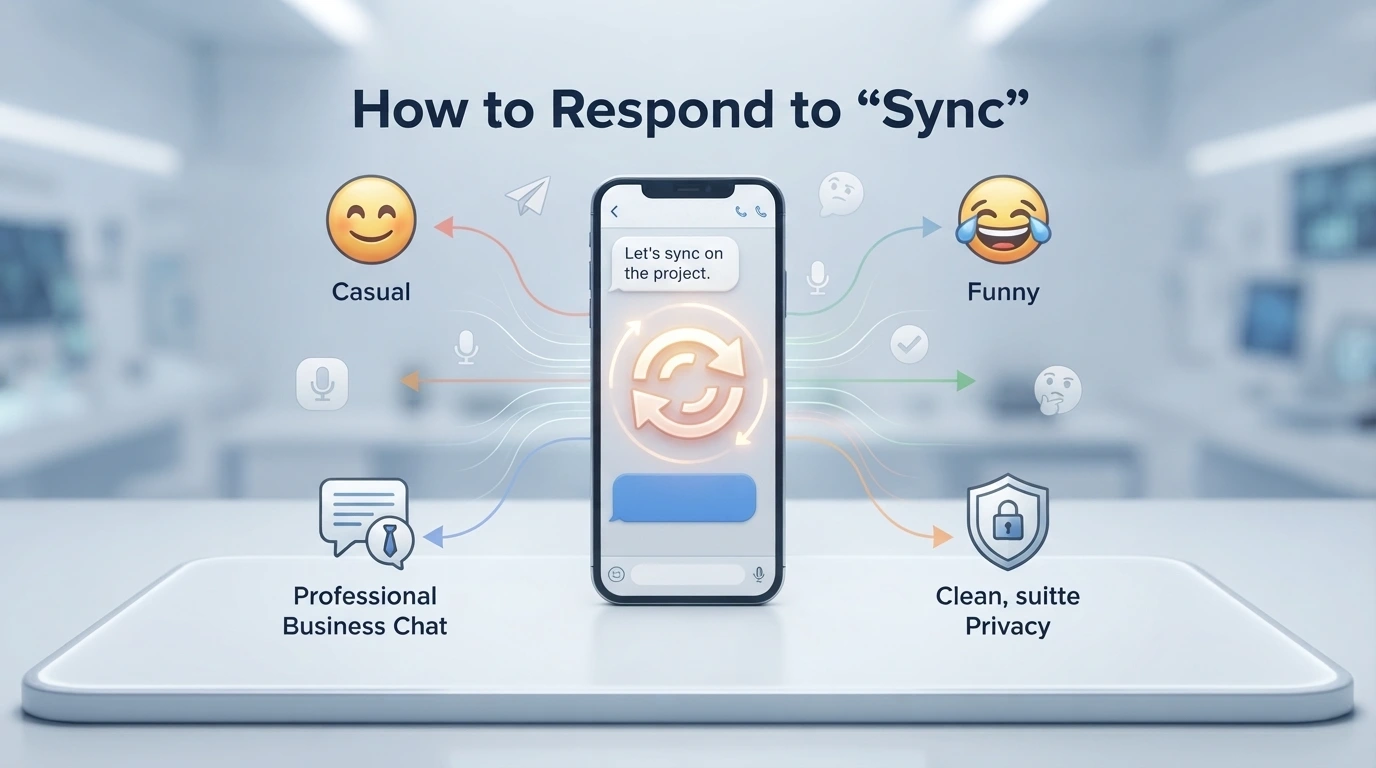
Your response should depend on the situation.
Casual response
If a friend says:
“Let’s sync later.”
You can say:
“Sure, just let me know when.”
Or:
“Sounds good!”
Funny response
If you want to be playful:
Friend: “We need to sync.”
You: “Give me five minutes. My brain is still loading.”
This works well with close friends.
Professional response
If a coworker says:
“Can we sync tomorrow?”
You can reply:
“Sure. What time works best for you?”
Or:
“Absolutely. I’m available after 10 AM.”
Short response
For a quick text:
“Sure.”
“Sounds good.”
“Yes, let’s do it.”
Privacy-conscious response
Sometimes someone may ask to “sync” about something you do not want to discuss.
You can politely say:
“I’d prefer to keep this private for now.”
Or:
“I’m not comfortable discussing that yet.”
You do not have to share personal information just because someone wants to “sync.”
Regional or Cultural Differences
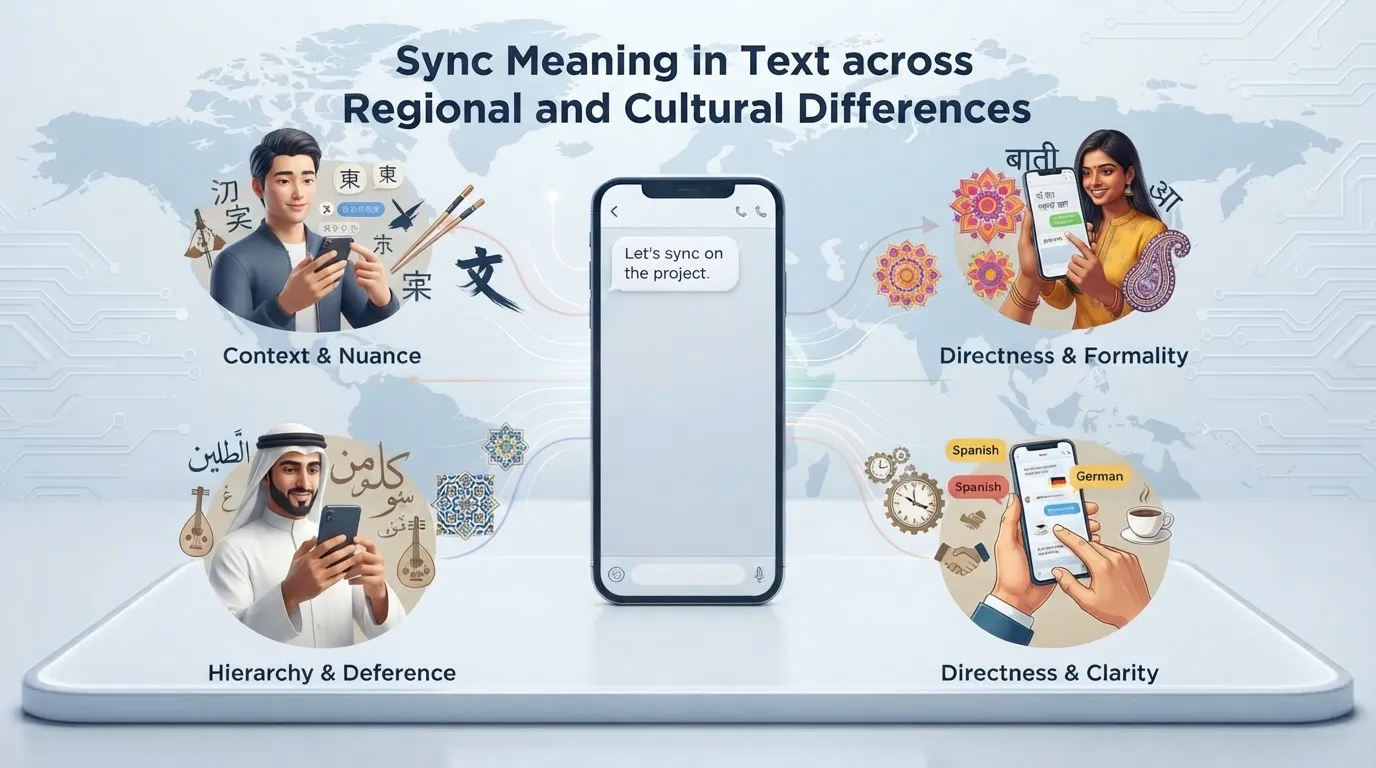
The word sync is widely understood in English-speaking digital environments. Because English is common in technology and online communication, the term has also spread into conversations among people who speak other languages.
In many countries, people use English technology words alongside their native language.
For example, a speaker might use the equivalent of:
“Let’s sync karte hain.”
in informal South Asian communication.
The exact grammar may change, but the basic idea remains: let’s coordinate or discuss.
In professional environments, people may also use terms such as:
- Align
- Coordinate
- Connect
- Discuss
- Update
- Meet
The word “sync” is especially common among people who work with technology, digital marketing, software, remote teams, and online businesses.
However, not every person will use it.
If someone does not understand “sync,” a clearer phrase such as “Let’s talk and coordinate” may be easier.
Cultural context also affects tone.
In some workplaces, “Let’s sync” sounds normal and efficient.
In more traditional or formal environments, “Let’s discuss this” or “Let’s schedule a meeting” may sound more natural.
Comparison With Similar Terms

Understanding the differences between related expressions can make texting easier.
| Expression | Meaning | Example |
| Sync | Match, coordinate, or update | “Let’s sync tomorrow.” |
| In sync | Working or thinking together | “We are in sync.” |
| Sync up | Coordinate or communicate | “Let’s sync up later.” |
| Align | Reach agreement | “Let’s align on the plan.” |
| Catch up | Talk about recent events | “Let’s catch up tonight.” |
| Check in | Contact someone for an update | “I’ll check in tomorrow.” |
| Connect | Talk or communicate | “Let’s connect soon.” |
| Coordinate | Organize activities | “Let’s coordinate the schedule.” |
| Update | Give or receive new information | “Please update me.” |
“Sync up”
Sync up is very similar to “sync.”
For example:
“Let’s sync up after lunch.”
It usually means:
“Let’s talk or coordinate after lunch.”
“In sync”
This phrase describes a state.
“We are in sync.”
It means:
“We understand each other or are working together well.”
“Catch up”
“Catch up” is different.
If someone says:
“Let’s catch up.”
they usually want to talk about what has happened recently.
“Let’s sync” is often more focused on coordination or a specific topic.
Sync in Online Communities & Dating Apps
The word sync can appear in online communities, gaming groups, social platforms, and dating conversations.
In online communities, users may use it when discussing teamwork.
For example:
“Let’s sync before the tournament.”
This could mean the players need to discuss strategy.
In gaming communities:
“Are we all synced?”
may mean:
“Are we all ready and coordinated?”
Sync on social platforms
People may use the term when talking about content.
For example:
“The audio and video are perfectly synced.”
This means the sound matches the visual timing.
Sync in dating conversations
In dating conversations, “sync” can have a more personal meaning.
Someone might say:
“I feel like we’re really in sync.”
This can mean they share similar interests, humor, values, or feelings.
For example:
Person 1: “We both love traveling and old movies.”
Person 2: “We are definitely in sync.”
Here, the meaning is closer to we connect well.
If someone on a dating app says:
“Let’s sync sometime.”
they may simply mean let’s talk or meet and see how well we connect.
Do not assume a deeper meaning without considering the conversation.
Hidden or Offensive Meanings
The word sync itself usually does not have a hidden offensive meaning.
It is generally a neutral English word.
However, almost any normal word can sound negative when used sarcastically or aggressively.
For example:
“Maybe sync with reality first.”
This is not a normal request to coordinate. It is an insult suggesting that someone does not understand reality.
Another example:
“You clearly aren’t synced with everyone else.”
Depending on tone, this could be criticism.
Therefore, context matters.
Could “sync” have another meaning?
In technology, sync has a very specific meaning related to matching or updating data.
In conversation, it usually means coordinating or communicating.
There are also specialized uses in areas such as music and film.
For example:
“The audio is out of sync.”
This means the audio and video do not match correctly in timing.
So, there is no single hidden meaning that automatically makes “sync” offensive.
Always look at:
- The full sentence
- The relationship between the speakers
- The tone
- The platform
- The topic being discussed
Suitability for Professional Communication

Sync is acceptable in many professional environments, especially in modern workplaces.
For example:
“Can we sync tomorrow about the campaign?”
This is common in technology, marketing, business, startups, and remote work.
However, “sync” can sound somewhat informal.
For highly formal communication, clearer alternatives may be better.
Instead of:
“Let’s sync.”
you could write:
“Let’s discuss this.”
Or:
“Let’s schedule a meeting to discuss the project.”
Instead of:
“Let’s sync on the details.”
you could write:
“Let’s review the details together.”
Professional alternatives
Use:
- Discuss
- Coordinate
- Review
- Meet
- Connect
- Align
- Confirm
- Follow up
- Schedule a meeting
Example
Informal workplace message:
“Can we sync later?”
More professional:
“Could we schedule a brief meeting to discuss this later today?”
Both are correct. The second simply sounds more formal.
FAQs About Sync Meaning in Text
1. What does “sync” mean in texting?
In texting, sync usually means to coordinate, communicate, agree, or get on the same page. The exact meaning depends on the conversation.
2. What does “let’s sync” mean?
“Let’s sync” usually means “Let’s talk and make sure we understand or agree about something.” It can also mean arranging a short meeting.
3. What does “in sync” mean?
“In sync” means working together, thinking similarly, or matching well.
For example:
“We were both thinking the same thing. We are in sync!”
4. Is sync short for synchronize?
Yes. Sync is a shortened form of synchronize or synchronization. It is now commonly used as a normal word, especially in technology and casual communication.
5. Does sync mean agree?
Sometimes.
If someone says:
“Let’s sync on this.”
they may mean they want to discuss the issue and reach a shared understanding.
However, “sync” can also mean simply communicate or coordinate, not necessarily agree.
6. What does sync mean in technology?
In technology, sync means keeping information, files, settings, or devices updated and matched.
For example, a phone may sync contacts with an online account.
7. Is “sync” appropriate at work?
Yes. It is widely used in modern workplaces, especially in technology and business. However, discuss, coordinate, or meet may be better choices in very formal communication.
Conclusion
The sync meaning in text is usually simple: to match, coordinate, communicate, or stay on the same page. The word comes from “synchronize” and has become common in both technology and everyday communication.
When a friend says “Let’s sync,” they probably want to talk or coordinate. When someone says “We are in sync,” they usually mean that two people understand each other or think alike. In technology, “sync” usually refers to keeping data or devices updated.
The word is common in texting, social media, gaming, dating apps, and professional communication. It is normally neutral and not offensive.
The most important thing is context. Look at the sentence, situation, and tone before deciding what “sync” means. When in doubt, you can use clearer words such as talk, discuss, coordinate, connect, or align.

Asfan Wahab is a content creator and writer focused on text meanings, slang, abbreviations, acronyms, and internet expressions. Through Orvexale.com, he provides clear and simple explanations to help readers understand modern texting language. His goal is to make confusing terms easy to understand with practical examples and everyday context.