You get a text. It just says “allg”. No punctuation. No explanation. What now?
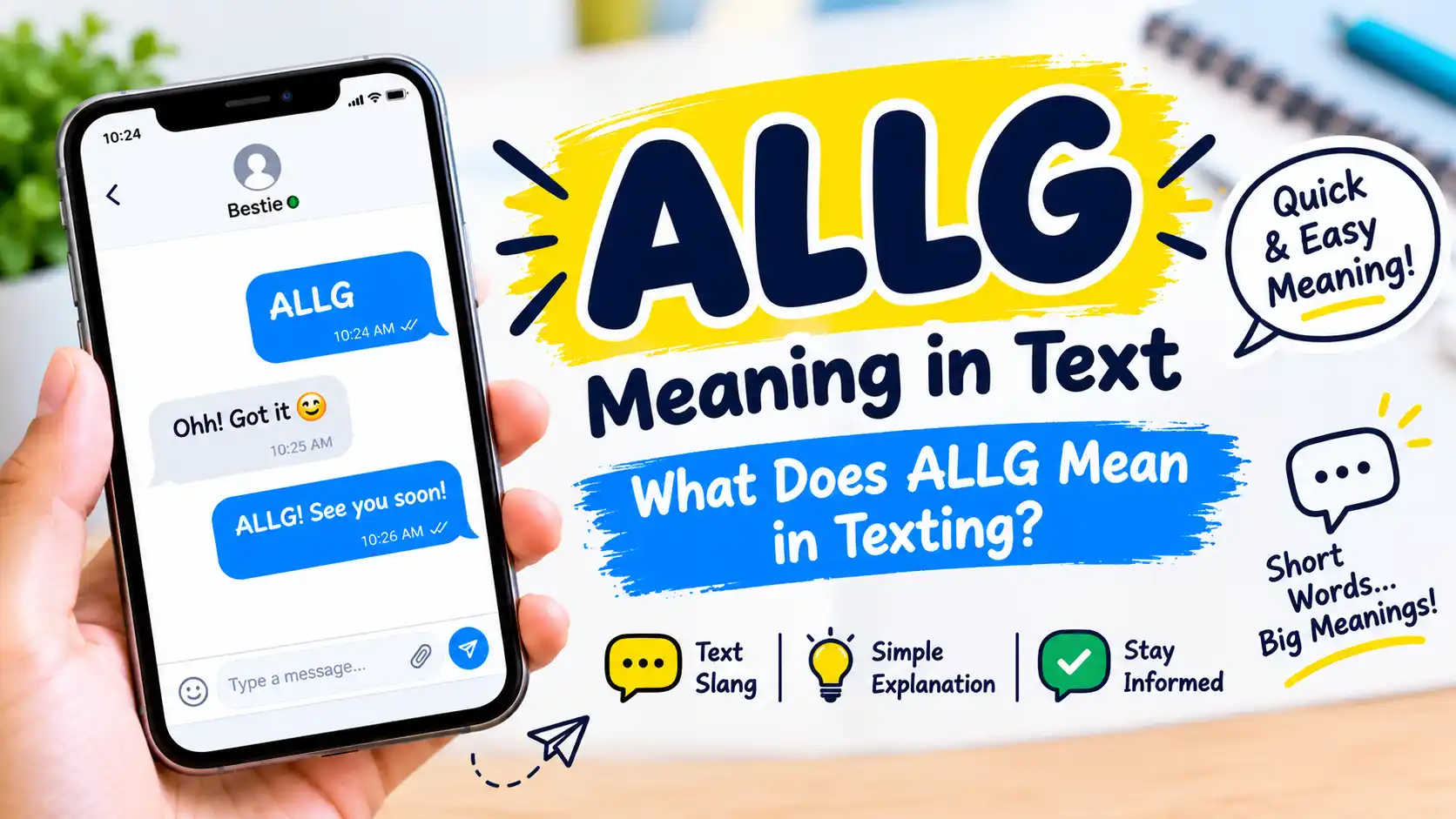
ALLG stands for “all good.” People use it to say things are fine, calm, or no big deal. It shows up in texts, group chats, gaming lobbies, and social media comments every day.
This short word carries a lot of weight.Sometimes, it can close an argument. In other cases, it answers a worried question. When needed, it can also end a conversation with a friendly tone. Knowing what it means, and when to use it, helps you sound natural instead of confused.
This guide breaks down where allg comes from, how people use it, and how you should respond when someone sends it to you. By the end, you’ll never have to guess again.
Definition & Meaning
ALLG is short for “all good.” It’s an abbreviation, the same way “brb” means “be right back” or “np” means “no problem.”
People use allg to say:
- Everything is fine.
- There’s no problem.
- They forgive you or aren’t upset.
- A plan or situation is okay as is.
Here’s how it looks in real texts:
Sam: Sorry I’m running 10 min late Jess: allg take your time
Mike: did I leave my charger at your place? Dan: yeah I have it, allg I’ll bring it tomorrow
Group chat: anyone else annoyed the game got delayed? Leo: allg, gives us more time to save up
Notice the pattern. Allg almost always answers a concern. Someone apologizes, asks a favor, or raises an issue, and allg closes the loop. It’s short, calm, and low effort by design. That’s the whole point.
It differs slightly from “ok” or “fine.” Those can sound flat or even annoyed, depending on tone. Allg carries a warmer, more relaxed feeling. It signals “don’t worry about it” more than “I heard you.”
Background & History
Texting slang exploded once phones added character limits and predictive typing became common. Early texters shortened words to save time and keystrokes. “All good” naturally became “allg” once people started compressing multi word phrases into single blocks.
This fits a bigger pattern in internet language. Words like “gr8” (great), “np” (no problem), and “ikr” (I know, right) all followed the same shortcut logic: keep the sound, drop the extra letters.
Allg likely grew alongside similar terms like “ig” (I guess) and “sm” (so much) in the 2010s, as texting culture shifted from full sentences to quick, casual fragments. Smartphones with autocorrect and larger keyboards reduced the need to abbreviate, but the habit had already become part of youth and internet culture. Speed wasn’t the only reason anymore. Sounding casual and in the know mattered too.
Today, allg shows up across texting apps, Discord servers, gaming chats, and comment sections. It’s especially common among younger users, though it has spread widely enough that most people online recognize it, even if they don’t use it themselves.
Unlike some slang that fades fast, allg has stayed steady because it’s simple, flexible, and easy to type. It doesn’t rely on a meme or trend to stay relevant. It’s just a shortcut for a phrase people say constantly in real life.
Usage in Various Contexts
Allg flexes across nearly every digital space. Here’s how it plays out.
Texting
Mom: did you eat dinner yet? You: yeah allg, ate before I left
Here, allg reassures. It tells mom not to worry.
Social Media Comments
User1: ngl this post kinda flopped User2: allg, next one will hit different
On social media, allg softens criticism or brushes off a small setback.
Gaming Chats
Teammate: my bad, I missed that call You: allg, we still got the round
In gaming, timing matters. Allg keeps the mood light after a mistake, so the team stays focused instead of tense.
Casual Conversations Among Friends
Friend: I can’t make it tonight, something came up You: allg, we’ll do it another time
This shows flexibility. Allg signals there are no hard feelings about a canceled plan.
Professional or Semi Formal Chats
This one’s trickier. Allg rarely appears in work Slack messages or emails, since it reads as very informal. Some workplaces with casual cultures might tolerate it in quick internal chats, but it’s best avoided with clients, managers, or anyone outside your close team.
Across all these settings, the core function stays the same: allg lowers tension and moves the conversation forward. It’s rarely the start of a topic. It’s almost always the wrap up.
Common Misconceptions & Clarifications
Some people mistake allg for a typo of “ally” or confuse it with unrelated abbreviations. Here’s what to keep straight.
Misconception 1: Allg means “I agree.” Not quite. Allg means things are fine or okay, not necessarily that you agree with a statement or opinion. It’s closer to “no worries” than “you’re right.”
Misconception 2: Allg is sarcastic by default. Tone matters here. Written alone, allg usually reads as sincere and calm. But like any short text response, it can come across as dismissive if the conversation calls for a longer, more thoughtful reply. If someone shares something serious or emotional, a bare “allg” might feel cold, even if that’s not the intent.
Misconception 3: It’s only for teens. While allg started strong among younger texters, adults use it too, especially in casual friend groups, gaming communities, and informal work chats.
Misconception 4: Allg is rude or dismissive. On its own, no. But context changes everything. If someone explains a real problem and gets only “allg” back with no follow up, it can feel like their concern was brushed off. The word isn’t rude, but a lack of follow up can be.
Clarification on appropriateness: Allg isn’t offensive or vulgar. It carries no hidden negative meaning. The only caution is tone and setting, not the word itself.
Similar Terms & Alternatives
Several phrases overlap with allg. Here’s how they compare.
| Term | Meaning | Best Used When |
| Allg | All good | Reassuring someone, closing a small issue |
| NP | No problem | Responding to thanks or an apology |
| Ok | Acknowledged | Neutral confirmation, no extra warmth |
| Fine | Acceptable, sometimes flat | Can sound annoyed depending on tone |
| All gucci | Everything’s great | Playful, upbeat version of “all good” |
| We good | Confirming no tension | Checking in after a disagreement |
| It’s all good | Full version of allg | Slightly more sincere or reassuring tone |
| Chill | Relaxed, no issue | Casual reassurance, similar warmth to allg |
Allg stands out because it’s short, casual, and warm without needing extra words. “NP” feels more transactional. “Fine” can feel cold. “All gucci” is playful but less common outside certain slang heavy circles.
How to Respond to This Term
How you reply to allg depends on the vibe you’re going for.
Casual:
Friend: allg, don’t stress about it You: appreciate it lol
Funny:
Friend: allg, no worries You: phew, crisis averted 😂
Professional (if it somehow comes up):
Coworker: allg, we’ll sort it out tomorrow You: Sounds good, thanks for understanding.
Privacy conscious or brief:
Person: allg You: 👍
Warm and appreciative:
Person: allg, seriously don’t worry You: you’re the best, thank you
A short reply usually fits, since allg itself is meant to close a topic, not open a long discussion. Matching that energy keeps the conversation natural.
Regional or Cultural Differences
Allg is mostly an English language texting term, common in the US, UK, Canada, Australia, and other English speaking online spaces. It doesn’t have strong regional variants tied to specific countries, unlike some slang that shifts meaning across dialects.
That said, some regional flavor exists:
- US slang often pairs “allg” with “bet” or “fr” (for real) in the same sentence.
- UK slang sometimes favors “sound” or “sorted” instead, though “allg” still appears, especially among younger texters influenced by American social media.
- Australian slang often prefers “no dramas” for the same meaning, but “allg” shows up in gaming and texting too.
In non English speaking regions, allg appears mostly among bilingual or English influenced online communities, particularly in gaming and global Discord servers where English slang spreads fast regardless of the user’s first language.
Comparison with Similar Terms
Here’s a closer side by side, focused on tone and formality.
| Term | Formality | Warmth | Typical Platform |
| Allg | Very informal | High | Texting, gaming, social media |
| NP | Informal | Medium | Texting, chat apps |
| All good | Neutral to informal | High | Texting, speech |
| Fine | Neutral | Low to medium | Anywhere, tone dependent |
| Ok | Neutral | Low | Anywhere |
| We’re good | Informal | High | Texting, in person follow up |
The biggest difference is warmth. Allg reads friendlier than “ok” or “fine,” even though all three can technically answer the same question.
Usage in Online Communities & Dating Apps
On platforms like Twitter/X, allg often appears in replies to calm down a thread or brush off criticism lightly:
Reply: ngl that take was rough Original poster: allg, everyone’s got opinions
On gaming platforms like Discord or in game chat, allg smooths over mistakes mid match, keeping teams focused instead of frustrated.
On dating apps like Tinder or Hinge, allg shows up when plans shift or when someone apologizes for a late reply:
Match: sorry for the late reply, work’s been hectic You: allg, no rush at all
Here, allg signals patience and low pressure energy, which tends to read well in early dating conversations. It shows you’re easygoing without seeming uninterested.
Tip for responding on these platforms: match the casual tone, but add a touch of personality. A flat “allg” back can feel low effort in a dating context, so pairing it with a follow up question keeps the conversation moving.
Hidden or Offensive Meanings
Allg has no hidden offensive meaning. It’s a straightforward abbreviation for “all good,” used the same way across most communities.
The only issue that comes up is tone mismatch. If someone shares a serious problem, like a health scare or a personal loss, and receives only “allg” in response, it can feel careless, even though the sender likely meant nothing negative by it. Context, not the word itself, creates the risk of sounding dismissive.
There’s no slang dictionary or online community that lists allg as vulgar, coded, or double meaning. It’s one of the more neutral, low risk pieces of texting shorthand out there.
Suitability for Professional Communication
Allg is too casual for formal professional communication. Avoid it in emails, client messages, or formal reports.
For work settings, use these alternatives instead:
- “Understood, no issue on my end.”
- “That works fine, thanks for the update.”
- “No problem at all.”
- “Sounds good, we’re all set.”
In casual internal chats with a close team, especially in startups or informal workplace cultures, some flexibility exists. Still, when in doubt, spell it out. Professional trust builds faster with clear language than with trendy shorthand.
FAQs
1. What does allg mean in texting? It means “all good,” used to say something is fine or there’s no issue.
2. Is allg the same ok? Not exactly. Allg feels warmer and more reassuring, while “ok” can sound flatter or more neutral.
3. Can allg be used in professional emails? No. It’s too informal for professional writing. Use full phrases like “no problem” instead.
4. Is allg rude or sarcastic? Not by default. It only feels dismissive if used as the only response to a serious concern.
5. Where did allg come from? It grew out of texting culture’s habit of shortening common phrases like “all good” to save time and sound casual.
6. Do people use allg outside the US? Yes, though it’s most common in English speaking texting and gaming communities worldwide.
7. What’s a good response to allg? A short, casual reply works best, like “thanks” or a simple emoji, since allg usually signals the topic is settled.
Conclusion
Allg simply means “all good.” It’s a small word that carries a big job: closing conversations gently, calming tension, and letting someone know there’s nothing to worry about.
You’ll see it in texts, gaming chats, social media replies, and dating app messages. It stays casual, so it’s best kept out of professional writing. But in everyday digital conversations, allg keeps things light, quick, and reassuring.

Noman Hassan is a content creator and writer focused on text meanings, slang, abbreviations, acronyms, and internet expressions. Through Orvexale.com, he provides clear and simple explanations to help readers understand modern texting language. His goal is to make confusing terms easy to understand with practical examples and everyday context.