You have seen it everywhere. A friend texts, “tbh, I don’t like that restaurant.” Someone on Instagram wrote, “tbh you look great today.” A gamer types it in chat mid match. But what does tbh really mean?
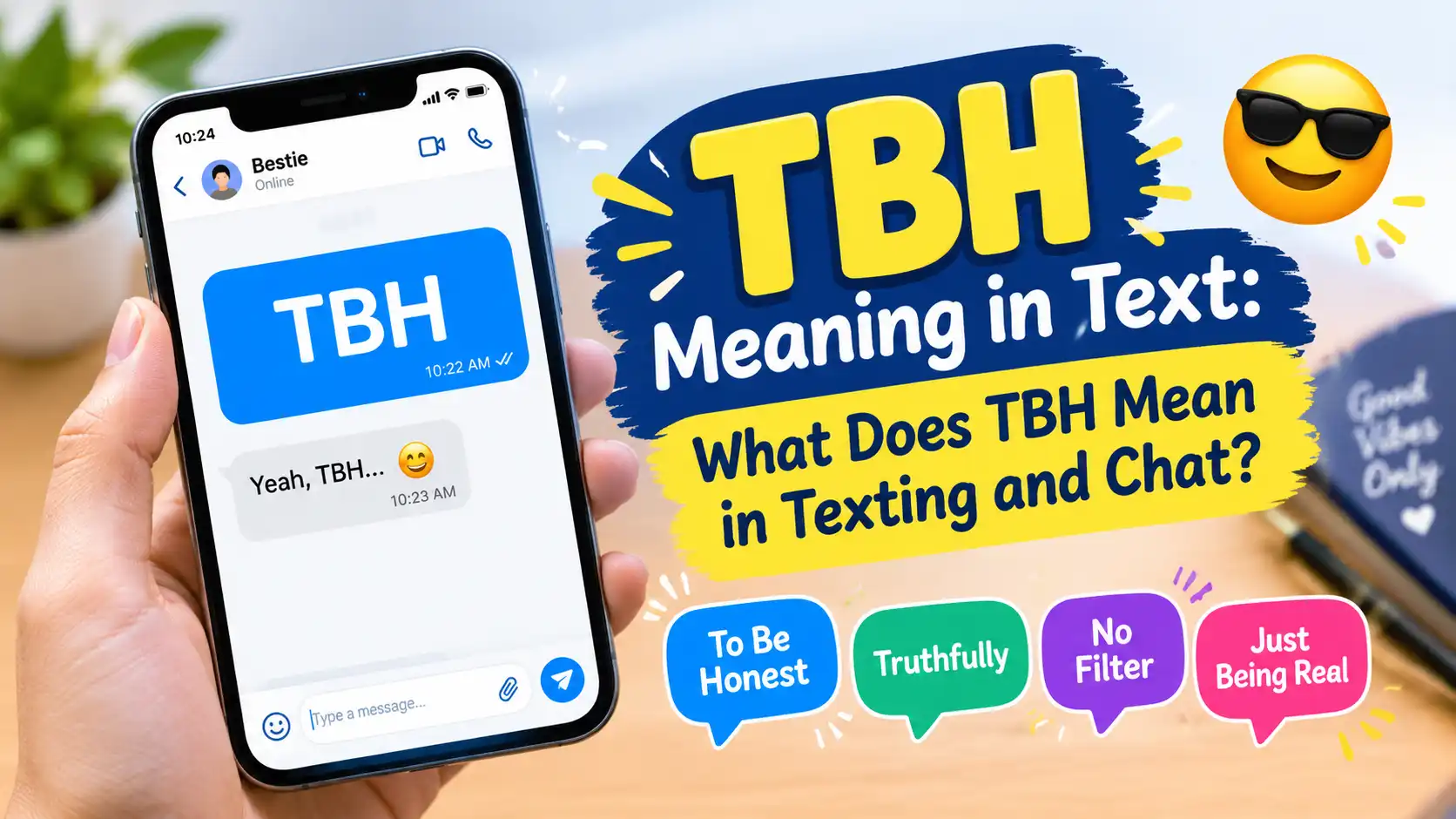
TBH stands for “to be honest.” People use it to share a real opinion. It shows up in texts, social media posts, gaming chats, and even some work messages. It’s short, quick, and easy to type.
Understanding tbh matters because it shapes how we read tone online. A short word can carry a lot of meaning. Sharing bad news can feel softer when you use it. A compliment can also feel more meaningful with TBH. However, people unfamiliar with the abbreviation may find it confusing.
This guide breaks down everything about tbh. You’ll learn its meaning, history, uses, and how to reply to it. By the end, you’ll never wonder about this small but powerful term again.
Definition & Meaning
TBH means “to be honest.” People use it before or after a statement. It signals that the speaker is giving their true opinion, even if that opinion is blunt or unexpected.
The phrase works like a small flag. It tells the reader, “Pay attention. This is what I really think.” Sometimes it softens criticism. Other times it adds sincerity to praise.
Real Life Examples
Here are common ways people use tbh in daily life:
- Text message: “tbh I forgot we had plans tonight.”
- Social media comment: “This song is so underrated tbh.”
- Group chat: “tbh I think we should just order pizza.”
- Review: “The service was slow, tbh.”
Notice how tbh can go at the start or the end of a sentence. Both placements work. The meaning stays the same: an honest opinion follows or precedes it.
Sometimes tbh stands alone as a full reply. For example:
Friend: Did you like the movie? You: tbh, not really.
This short reply feels more casual and honest than saying “To be honest, I did not really enjoy the movie.” The abbreviation keeps things light while still being direct.
TBH also appears in longer forms sometimes, like “tbh fam” (to be honest, my friend) or combined with other slang like “ngl tbh” (not gonna lie, to be honest). These combinations stack sincerity markers together, often for extra emphasis or humor.
In writing, tbh usually appears in lowercase. This matches its casual, conversational tone. Using all caps (“TBH”) can make it feel more emphatic, almost like shouting honesty.
Background & History
The phrase “to be honest” has existed in English for a long time. People have always used it to introduce a candid opinion. But the shortened form, tbh, is a product of the digital age.
Origins
TBH began appearing in online forums and early instant messaging in the early 2000s. As texting grew popular, people needed ways to type faster. Abbreviations like lol, brb, and tbh filled that need. Short forms saved time and effort on early phone keyboards, which lacked full keyboards and predictive text.
Rise Through Social Media
TBH gained a fresh wave of popularity around 2017. An app called TBH launched that year, letting teens send anonymous compliments to friends. This app used the phrase directly in its name and pushed the term into mainstream teen culture. It briefly became one of the top apps in the U.S. before Facebook acquired it.
Even after the app faded, the phrase stuck around. It kept its place in texting and social media captions. People used “tbh” tags on Instagram polls, inviting friends to leave honest comments.
Evolution Over Time
Today, tbh has moved beyond just teens. It appears in professional Slack messages, product reviews, dating app bios, and casual conversations across all age groups. Its meaning hasn’t changed much. It still signals honesty. But its use has broadened far past its original teen texting roots.
Where it’s common today:
- Texting between friends and family
- Social media comments and captions
- Online reviews for products or services
- Gaming chats during matches
- Workplace messaging in casual company cultures
The phrase has proven durable because it fills a real need. People often want a quick way to flag their honesty. TBH does that job in just three letters.
Usage in Various Contexts
TBH shows up differently depending on where you see it. Let’s look at how it works across common platforms.
Texting
In texts, tbh often introduces a personal opinion or confession. It feels friendly and casual.
Sam: How was the date? Jamie: tbh, kind of awkward lol
Social Media
On platforms like Instagram and Twitter, tbh often appears in comments or captions. People use it to share reactions.
Comment on a photo: “You look amazing tbh 🔥” Tweet: “tbh I think this show got worse after season 2.”
Gaming
In gaming chats, tbh often gives quick feedback about strategy or performance.
Player 1: gg that was close Player 2: tbh we should’ve rotated earlier
Casual Conversations
In spoken or typed casual talk, tbh softens criticism or adds weight to praise.
Coworker: Did you like the new menu? You: tbh, the salad was better before.
Professional Settings
In relaxed workplace chats, tbh can appear too, though it’s less common in formal emails.
Slack message: “tbh I think we should push the deadline by a day.”
This usage still works, but it fits better in casual internal chats than in client facing emails.
Across all these contexts, tbh keeps one job: it flags an honest, sometimes blunt, opinion. The tone shifts slightly by platform, but the core meaning stays steady.
Common Misconceptions & Clarifications
Some people misunderstand tbh or use it in confusing ways. Let’s clear up the biggest mix ups.
Misconception 1: TBH Means the Person Was Lying Before
Some think that if someone says “tbh,” they were dishonest earlier. That’s not quite right. TBH usually just signals a shift toward a more direct or personal opinion. It doesn’t mean prior statements were false.
Misconception 2: TBH Is Always Negative
People sometimes assume tbh comes before bad news. In reality, it works for both positive and negative opinions.
“tbh, you did great in that presentation.”
This shows tbh can highlight sincere praise too, not just criticism.
Misconception 3: TBH Is Rude
Because tbh often introduces blunt opinions, some read it as harsh. Tone matters here. The words after tbh determine if the message feels rude or simply honest. Context and relationship history shape how a message lands.
Misconception 4: TBH Only Works for Teens
While the phrase grew popular with teen culture, adults use it just as often now. It has crossed age groups and settings.
Can TBH Be Inappropriate?
TBH itself is harmless. But if it introduces an insensitive or hurtful comment, the phrase won’t soften that. Saying “tbh” before something unkind doesn’t excuse the unkindness. The word only labels honesty. It doesn’t guarantee tact.
In professional settings, using tbh before criticism of a colleague’s work can feel too blunt without softer framing. It’s smart to pair honesty with kindness, especially in sensitive conversations.
Similar Terms & Alternatives
Many phrases share space with tbh in casual digital communication. Here’s how they compare.
| Term | Meaning | Common Use |
| TBH | To be honest | General honest opinions |
| NGL | Not gonna lie | Similar honesty flag, slightly more casual |
| IMO | In my opinion | Frames a personal viewpoint |
| IMHO | In my humble opinion | Softer, more polite framing |
| Honestly | Full word version | Works in formal or informal writing |
| Real talk | Signals sincerity | Common in casual and hip hop influenced speech |
| Fr fr | For real, for real | Emphasizes truthfulness, very casual |
Choosing the Right Term
- Use tbh for quick, casual honesty.
- Use IMHO when you want to sound more polite or less blunt.
- Use honestly in more formal writing where abbreviations feel out of place.
- Use ngl when the honesty feels a little more surprising or confessional.
These terms overlap, but small differences in tone set them apart. Picking the right one depends on your audience and platform.
How to Respond to This Term
When someone sends you a tbh message, your reply depends on the situation. Here are different response styles.
Casual Response
Them: tbh I think you should’ve picked the other job. You: haha fair point, I see it now
Funny Response
Them: tbh your dog is cuter than you. You: wow, rude but accurate 😂
Professional Response
Them: tbh I think the report needs more data. You: Thanks for the honest feedback. I’ll add more sources.
Privacy Conscious Response
If someone shares a tbh comment that feels too personal or public, you can steer the conversation gently.
Them: tbh I heard you’re thinking about quitting your job. You: I’d rather chat about that in person, if that’s okay.
Matching your tone to the situation keeps conversations smooth. A joke works with close friends. A polite thank you works better at work.
Regional or Cultural Differences
TBH started in English speaking online spaces, mainly the United States and United Kingdom. It has since spread globally through social media, gaming, and messaging apps.
Global Reach
Many non English speakers now use tbh too, especially younger users who mix English slang into their own language. This is common in countries with high social media use, like the Philippines, India, and parts of Latin America.
Regional Slang Variations
- In the UK, tbh sometimes pairs with other British slang, like “tbh mate, that’s rubbish.”
- In the US, tbh often blends with terms like “ngl” or “fr” for extra emphasis.
- In Asian English speaking communities, tbh often appears in gaming and K pop fan communities online.
While the core meaning stays the same everywhere, the surrounding slang and tone shift by region. The phrase itself remains a stable, recognizable marker of honesty across cultures.
Comparison with Similar Terms
Let’s compare tbh directly with a few related expressions to highlight subtle differences.
| Term | Formality | Typical Tone | Best For |
| TBH | Casual | Direct, honest | Quick opinions in texts or comments |
| NGL | Very casual | Confessional | Sharing a surprising or reluctant truth |
| IMO | Casual neutral | Personal viewpoint | Stating an opinion without heavy honesty framing |
| Honestly | Neutral formal | Sincere | Formal writing or spoken conversation |
| Frankly | Formal | Blunt, serious | Professional or serious discussions |
Key difference: TBH and NGL both flag honesty, but NGL often introduces something the speaker didn’t plan to admit. TBH feels more neutral and can appear even when there’s nothing surprising being shared.
Usage in Online Communities & Dating Apps
TBH plays a big role in casual digital spaces, including dating apps and online communities.
On Dating Apps
On apps like Tinder or Bumble, people use tbh in bios or messages to sound genuine.
Bio: “tbh I just want someone who laughs at my jokes.”
It can also appear in early conversations to build trust.
Match: tbh I’m nervous about this app lol You: Same here, tbh. Let’s just keep it casual.
On Twitter and Social Media
TBH threads sometimes circulate, where users invite others to leave honest comments about them. This builds on the old “tbh app” trend from 2017.
In Gaming Communities
Players often use tbh to give real feedback about teammates or strategy without sounding overly critical.
“tbh we lost that round because of poor positioning.”
Tips for Responding Appropriately
- Match the tone. If they’re joking, keep it light.
- Avoid oversharing in return if the setting feels public.
- Use it to build connection, not to be harsh.
TBH works well as a trust building tool in these spaces, as long as users stay kind and read the room.
Hidden or Offensive Meanings
TBH itself carries no offensive meaning. It’s a neutral phrase that simply means “to be honest.” However, context can shape how it lands.
When Tone Matters
If someone uses tbh to introduce a harsh or hurtful comment, the phrase can feel like a shield for rudeness. For example:
“tbh, nobody likes you.”
Here, the honesty label doesn’t soften the impact. It can actually add sting, since it frames the comment as a widely held truth rather than one person’s opinion.
No Hidden Slang Meaning
Unlike some abbreviations, tbh does not carry secret or coded meanings in mainstream use. It stays consistent: “to be honest,” across texting, gaming, and social platforms.
Why Context Matters
The same three letters can feel warm or cold depending on:
- The relationship between speakers
- The words that follow
- The platform (private text vs. public comment)
Reading tone in text is tricky. Without facial expressions or vocal tone, tbh messages can be misread. It’s wise to consider your relationship with the reader before sending blunt tbh comments, especially in group settings.
Suitability for Professional Communication
TBH fits casual work chats but doesn’t always suit formal communication.
When It Works
- Internal team chats (Slack, Teams) with a relaxed culture
- Quick feedback among close coworkers
- Informal brainstorming sessions
“tbh I think option B looks stronger.”
When to Avoid It
- Client facing emails
- Formal reports or presentations
- Communication with senior leadership you don’t know well
Professional Alternatives
Instead of tbh, try:
- “In my honest opinion…”
- “Speaking candidly…”
- “To share my honest feedback…”
- “Frankly speaking…”
These alternatives keep the same honest tone but sound more polished for formal settings.
FAQs
1. What does tbh mean in texting? TBH means “to be honest.” It signals a genuine opinion in a text message.
2. Is tbh rude? Not by itself. The words that follow tbh determine if a message feels rude or simply direct.
3. Can I use tbh in a work email? It’s better to avoid it in formal emails. Use phrases like “honestly” or “candidly” instead.
4. What’s the difference between tbh and ngl? TBH means “to be honest,” while ngl means “not gonna lie.” NGL often introduces a surprising or reluctant truth, while tbh feels more neutral.
5. Where did tbh come from? It comes from early internet slang and texting culture, gaining a boost in 2017 through a popular app of the same name.
6. Is tbh used outside English speaking countries? Yes. Many non English speakers, especially younger users, mix tbh into their own language on social media and messaging apps.
7. How should I reply to a tbh message? Match the tone. Reply casually with friends, thoughtfully at work, and gently if the topic feels sensitive.
Conclusion
TBH stands for “to be honest.” It’s a small phrase with a big role in how we communicate online. From texting to gaming to dating apps, it helps people flag genuine opinions quickly.
Understanding tbh means understanding tone, context, and platform. The same three letters can feel warm, blunt, or playful depending on how they’re used. Knowing when to use tbh, and how to respond to it, helps conversations flow more smoothly.
If you’re texting a friend or reacting to a social media post, tbh remains one of the simplest ways to signal honesty in digital conversation.

Noman Hassan is a content creator and writer focused on text meanings, slang, abbreviations, acronyms, and internet expressions. Through Orvexale.com, he provides clear and simple explanations to help readers understand modern texting language. His goal is to make confusing terms easy to understand with practical examples and everyday context.