You get a text. It says “TSS.” You stare at it. What does it mean?
You are not alone. Slang moves fast. New short forms pop up every week. One day you know them all. The next day, you are lost.
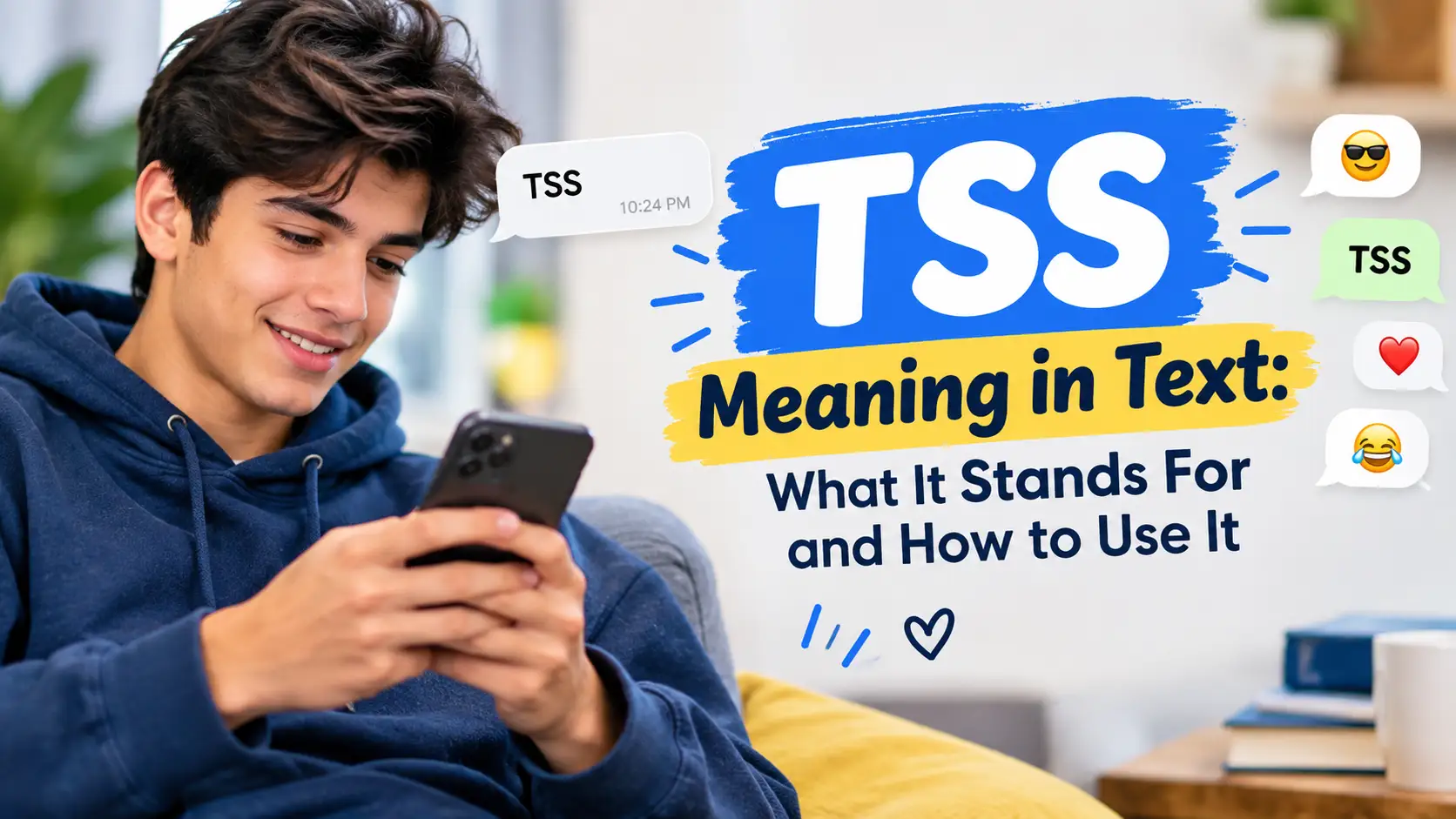
TSS most often means “That’s So Sad.” People use it in texts, on TikTok, on X (Twitter), and in game chats. Sometimes they mean it. Often they say it as a joke.
That is the tricky part. The same three letters can show real care or playful mockery. Tone changes everything.
From a friend, you might even get it after sharing a small, silly problem.
Knowing this term helps you avoid awkward moments. You will know when to say “aw, thanks” and when to laugh. You will also know when to skip it at work.
This guide explains it all in plain words. You will get meanings, examples, replies, and safe alternatives. Let’s start.
Definition & Meaning
What does TSS stand for?
TSS = “That’s So Sad.”
It is a short way to say something is sad, unfortunate, or a bit pitiful. It can be sincere or sarcastic.
Sincere use
Someone shares bad news. You feel for them. You type TSS.
Mia: My cat is sick. The vet is tomorrow. Leo: tss, hope she’s okay 💛
Here, TSS shows care. It is quick and soft.
Sarcastic use
Someone whines about a tiny problem. You tease them.
Sam: I had to wait 5 minutes for my coffee. Ava: tss 😭😭
The crying emojis are a clue. Ava is joking. She does not think this is truly sad.
Other meanings
TSS can mean other things, but they are rare in texting:
- This Sh*t Sucks: a rude, angry use (less common)
- Total Suspended Solids: a water quality term
- Toxic Shock Syndrome: a medical term
In a text from a friend, “That’s So Sad” is the best guess.
Quick tip
Check the mood of the chat Those three clues will usually tell you what TSS means.
Background & History
Where did it come from?
The phrase “that’s so sad” is old. People have said it for years. It was a plain way to show sympathy.
Then the internet changed it.
The meme era
Around the late 2010s, a meme spread online. It joked about a sad moment and asked a smart speaker to play a sad song. The line was “that’s so sad.” It got copied everywhere. Soon, the phrase turned into a sarcastic reaction.
After that, people started to shorten it. Texting loves short forms. Why type three words when you can type three letters?
How it grew
- Social media: TikTok, X, and Instagram comments made TSS common.
- Group chats: Friends used it to tease each other.
- Gaming: Players used it after a loss or a bad play.
How it changed
At first, it was serious. Then it became a joke. Now it is both.
Today, the tone is the message. A soft TSS shows care. A TSS with laughing emojis is a playful tease.
Where it is used now
You will mostly see TSS among teens and young adults. It shows up in casual chats, comment sections, and game lobbies. You will rarely see it in offices or formal emails.
Slang can fade fast. TSS may stay, or it may vanish. For now, it is still around.
Usage in Various Contexts
Where you see TSS changes what it means. Here are the main places.
Texting
Friends use TSS to react to news, big or small.
Jay: Missed my bus. Again. Nora: tss 😂 third time this week
Social media
On TikTok or X, people drop TSS in comments. It often replies to a dramatic post.
Post: “My phone is at 9% and I have no charger.” Comment: tss 💀
Here, TSS is almost always a joke.
Gaming
Gamers use it after a loss, a bug, or a bad moment.
Player 1: I lost the match by one point. Player 2: tss, gg though
“GG” means “good game.” The two work well together.
Casual conversations
Sometimes people even say “tee ess ess” out loud. It is rare, but it happens among close friends.
Chris: I dropped my ice cream. Dana: TSS. Want a new one?
Dana starts as a joke, then offers to help.
Quick guide
Setting
Usual tone
Example
Texting
Caring or teasing
“tss, that sucks”
Social media
Sarcastic
“tss 💀”
Gaming
Playful
“tss, gg”
Talking
Light joke
“TSS, bro”
Rule of thumb: the more emojis, the more likely it is a joke.
Common Misconceptions & Clarifications
Misconception 1: TSS always means real sadness
Not true. Many people use it to tease. If a friend tells TSS about your small problem, they are probably kidding.
Misconception 2: TSS is rude
Not always. Ultimately, the meaning depends on the tone and the person.
Misconception 3: TSS has only one meaning
Wrong. Other meanings exist. Some people use it as “This Sh*t Sucks.” Others use it in science or medicine. Context tells you which one fits.
Misconception 4: “Tss” is the same as “tsk”
Close, but no. “Tsk” is the sound of disapproval. Some people type “tss” as a sound too, like a hiss or an eye roll noise. If there is no clear message around it, it may be that sound.
Can it be misread?
Yes. Text has no voice. A joke can sound cold. A kind note can sound fake.
Example of a mix up:
Ella: I failed my driving test. Tom: tss Ella: …thanks a lot
Tom meant to show care. Ella felt mocked. A few more words would have helped.
How to stay safe
- Add a kind line when someone is truly hurting.
- Use emojis to show your mood.
- Ask if you are unsure. “Are you joking or serious?” works well.
When feelings are real, skip the slang. Say what you mean.
Similar Terms & Alternatives
Many phrases do the same job as TSS. Some are kind. Some are sarcastic.
Kind alternatives
- “That sucks.” Simple and warm.
- “Aw, I’m sorry.” Very sincere.
- “Big hug.” Shows care.
- “Ugh, so unfair.” Shows you are on their side.
Joking alternatives
- “Sadge.” A gamer and Twitch word for sad.
- “Cry about it.” A blunt, teasing line.
- “Oof.” A short sound for “that hurt.”
- “Rip.” Short for “rest in peace.” Used for small losses too.
- “I’m very sad.” A silly way to say very sad.
Comparison table
Term
Tone
Best for
TSS
Caring or sarcastic
Friends, chats
Oof
Light, sympathetic
Small mishaps
Rip
Joking
Funny losses
Sadge
Playful
Gaming, streams
I’m sorry
Sincere
Real trouble
That sucks
Casual, kind
Most situations
Example
Zoe: My game crashed before I saved. Ben: oof. rip your progress 😭
Ben uses two terms in one line.
Tip: Pick the term that fits your friend and the moment. If in doubt, choose the kind one.
How to Respond to This Term
How you reply depends on how it was meant. Here are four styles.
1. Casual
Keep it easy. Match the mood.
Friend: tss You: lol I know, right?
2. Funny
Play along. Make it a joke.
Friend: tss 😭 You: Don’t cry, I’ll buy you a snack.
Or:
You: Small violin playing just for me 🎻
3. Professional
If a coworker or boss uses it, stay calm and clear.
Coworker: tss about the delay You: Yes, it’s unfortunate. I’ll update the team by noon.
You do not need to copy the slang. Reply in plain words.
4. Privacy conscious
Maybe you do not want to share more. That is fine.
Friend: tss, what happened? You: Long story. I’d rather not get into it right now.
Or:
You: Thanks. I’m okay. I just needed a quiet day.
If you are not sure what it meant
Ask.
You: Wait, is that “that’s so sad” or a joke?
This is honest and kind. Most people will laugh and explain.
Quick tips
- Read the tone before you reply.
- Do not overshare if you feel unsure.
- Thank them if they meant it kindly.
- Laugh along if they were teasing.
Regional or Cultural Differences
Is TSS global?
Mostly, TSS is an English internet term. It spreads through social media, so you may see it in many countries. But it is not a “world language” term.
In English speaking places
You will find it in the US, UK, Canada, and Australia. Young people use it most. Older people may not know it at all.
In other languages
Many languages have their own short forms for “that’s sad.”
- Spanish: “qué triste” may be shortened online.
- French: “trop triste” is common in chats.
- Hindi and Urdu speakers often mix English slang with local words. You may see “TSS” in a Roman script chat, right next to local phrases.
Because of this, you may see TSS used inside a non English chat. It has been borrowed, like many English slang words.
Regional slang for the same idea
Place
Common phrase
US
“That’s rough,” “Big sad”
UK
“That’s grim,” “Gutted”
Australia
“Bummer,” “Rough”
Online gaming
“Sadge,” “Rip”
Cultural tone
In some cultures, teasing a friend about a small problem is normal and fun. In others, it can feel cold. Know your friend and their culture.
A gentle rule
If you chat with people from other places, choose clear, kind words. Slang can get lost in translation. “I’m sorry to hear that” works everywhere.
Comparison with Similar Terms
Let’s compare TSS with a few close cousins. Each one has a small difference.
TSS vs. SMH
SMH means “shaking my head.” It shows disappointment or disbelief. TSS shows sadness or mock sadness.
“He forgot his own party. smh” “He forgot his own party. tss”
The first is annoyed. The second is sad or joking.
TSS vs. Oof
Oof is about a painful moment. It is short and gentle. TSS can be sharper if used as sarcasm.
TSS vs. Rip
Rip treats a loss like a small funeral. It is very funny. TSS is more flexible.
TSS vs. TBH
TBH means “to be honest.” It has nothing to do with sadness. People sometimes mix up short forms with three letters.
TSS vs. Tsk
Tsk is a sound of mild disapproval. It is not an abbreviation. TSS has words behind it.
Comparison table
Term
Meaning
Feeling
TSS
That’s so sad
Sad or sarcastic
SMH
Shaking my head
Disappointed
Oof
That hurt
Sympathy
Rip
Rest in peace
Joking loss
TBH
To be honest
Frank
Tsk
Disapproval sound
Scolding
Key point: TSS is the only one here that centers on sadness, real or fake.
Usage in Online Communities & Dating Apps
Twitter / X
People drop TSS under dramatic posts. Usually, it is sarcasm.
Tweet: “My favorite show got a bad review 😔” Reply: tss 💀
TikTok and Instagram
In comments, TSS is a quick reaction. Creators often get it under sad story videos, and sometimes it is a joke and sometimes it is real support.
Gaming communities
On Discord, Twitch, and in game chats, TSS is a light tease.
Player: Died in the first minute. Teammate: tss. shake it off
Dating apps (Tinder, Bumble, Hinge)
On dating apps, be careful. A sarcastic TSS can feel cold to someone you just met.
Match: My flight got canceled. You: tss 😭 that’s the worst
The emoji helps. But a warm line is better:
You: Oh no, that’s awful. Are you okay?
Tips for responding on dating apps
- Do not tease about serious things.
- Use TSS only after you know their sense of humor.
- Add a follow up question to show interest.
- Be sincere first. Jokes can come later.
Tips for online communities
- Read the room. Every group has its own tone.
- Do not mock someone who is truly upset.
- Use emojis to make your mood clear.
- Report harassment if teasing turns into bullying.
Golden rule: online, people cannot see your face. Help them feel your intent with a few extra words.
Hidden or Offensive Meanings
Is TSS offensive?
Usually not. Most of the time it means “that’s so sad.” That is harmless.
But there are some cases to watch.
Alternative meanings
- “This Sh*t Sucks”: This one has a curse word. Some people use TSS this way when they are angry or fed up. It is rare, but it exists.
- Sarcasm as an insult: If you use TSS to mock someone’s real pain, it can feel cruel.
Why tone matters
Words do not carry sound. Only tone and context do. Think about these two texts:
Friend A: “My grandpa is in the hospital.” Friend B: “tss”
That could feel heartless. Now this:
Friend A: “The pizza place ran out of pepperoni.” Friend B: “tss 😭”
That is a clear joke.
Same letters. A very different feeling.
Signs a TSS is unkind
- It follows serious news.
- It has no emoji or kind words.
- It comes from someone who often teases in a mean way.
How to avoid hurting someone
- Save TSS for light topics.
- Use real words for heavy topics: “I’m so sorry.”
- Apologize fast if it landed wrong.
You: Sorry, I meant that as a joke. That was not the right time.
What if it is aimed at you?
You can say: “That felt unkind. Please don’t joke about it.” It is okay to set a limit.
Bottom line: TSS is not a bad word. It is a tool. How you use it decides whether it helps or hurts.
Suitability for Professional Communication
Is TSS okay at work?
No, it is not a good fit for formal settings. Here is why.
- It is slang. Formal writing needs clear words.
- It can be unclear. A boss or client may not know it.
- It can sound sarcastic. That may cause trouble.
Where it might be fine
On a casual team chat with close coworkers, a light TSS might pass. But even then, be careful. When in doubt, skip it.
Where to avoid it
- Emails to clients
- Reports and memos
- Job applications
- Messages to managers
- Customer support chats
Professional alternatives
Instead of TSS
Say this
tss about the delay
“That’s unfortunate about the delay.”
tss, sorry to hear
“I’m sorry to hear that.”
tss, that’s rough
“That sounds difficult. How can I help?”
tss on the loss
“I’m sorry for the loss.”
Example in a work chat
Manager: The client canceled the contract. You: That’s disappointing. Let me know how I can help with next steps.
This is calm, kind, and clear.
Example of what not to do
Manager: The client canceled the contract. You: tss
That looks careless. It may seem like you do not care.
Tips
- Match your boss’s style. If they use slang, you may relax a little.
- Write full sentences in formal messages.
- Be warm. Professional does not mean cold.
Clear words build trust. Slang can wait until after work.
FAQs
1. What does TSS mean in text?
TSS most often means “That’s So Sad.” It can be real or sarcastic, so check the tone.
2. Is TSS a rude thing to say?
Not by default. It is rude only when used to mock someone’s real pain. Use it for light, silly topics.
3. Can TSS mean something else?
Yes. It can mean “This Sh*t Sucks” in some chats. It can also mean Total Suspended Solids or Toxic Shock Syndrome in science and medicine. In casual texts, “That’s So Sad” is the safest guess.
4. How do I know if someone is joking when they say TSS?
Look for clues. Emojis like 😭 or 💀 usually mean a joke. Serious news plus a plain TSS may mean real sympathy. If you are still unsure, just ask.
5. Should I use TSS at work?
Better not. Use full sentences like “That’s unfortunate.” Slang can seem unprofessional.
6. Is TSS the same as “tsk”?
No. “Tsk” is a sound of disapproval. TSS is a short form with words behind it. Some people also type “tss” as a sound, so context matters.
7. How should I reply if someone sends TSS?
Match the mood. If it hurts, calmly tell them.
Conclusion
TSS is a small term with a big range of feelings. Most of the time, it means “That’s So Sad.” Sometimes it shows care. Often it is a playful tease.
Here are the key points to remember:
- Tone and emojis tell you what TSS really means.
- It works best in casual chats, games, and social media.
- Avoid it in serious moments and at work.
- Other meanings exist, but they are rare in texts.
- When in doubt, use kind, clear words instead.

Asfan Wahab is a content creator and writer focused on text meanings, slang, abbreviations, acronyms, and internet expressions. Through Orvexale.com, he provides clear and simple explanations to help readers understand modern texting language. His goal is to make confusing terms easy to understand with practical examples and everyday context.