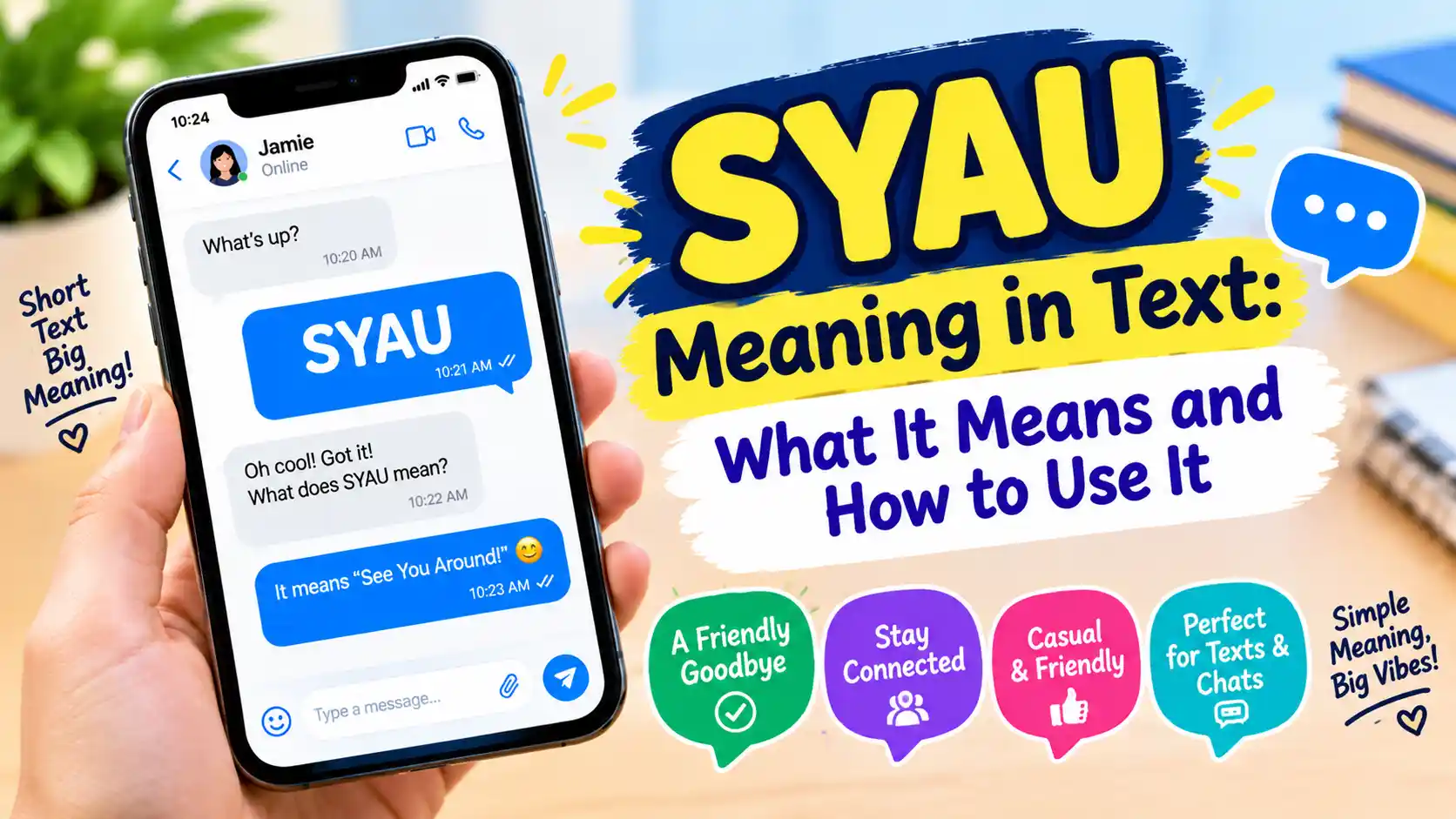
Perhaps you saw “syau” or “sybau” in a text, a comment, or a TikTok caption and had no idea what it meant. Many people have the same reaction when they first come across these slang terms.
This term blew up fast online. People use it in group chats, gaming lobbies, and comment sections. It sounds harmless at first. It is not always harmless.
Knowing what it means matters. It can change how you read a message from a friend. It can also help you avoid an awkward moment if someone sends it to you and you have no clue what to say back. Let’s break it down in plain terms.
Definition & Meaning
“Syau” is almost always a misspelling or shorthand for SYBAU. The real acronym is SYBAU, which stands for “Shut Your Bitch Ass Up.”
It is blunt. The phrase functions as an aggressive way to tell someone to stop talking, and it can feel playful among friends or rude and hostile depending on who says it and how.
Real life example:
Jake: bro I told you that movie was mid, you never listen to me
Sam: SYBAU lol
Here, it’s a joke between friends. No real anger behind it.
But it can also show up like this:
Random commenter: your opinion is trash
You: sybau
Same word. Sharper edge. Context decides the tone every time.
Some corners of the internet try to soften it into cute backronyms like “So You’re Beautiful And Unique.” This joking reading is sometimes used ironically, where a creator pretends to compliment someone before revealing the real meaning. Don’t be fooled that’s a bit, not the actual definition.
Background & History
SYBAU is not brand new. The earliest known use traces back to a 2003 Urban Dictionary entry. It sat around online for years without much attention.
Then it exploded. It went viral on TikTok in late 2024 and early 2025, spreading through comment sections, duets, and reaction videos.
Since then, it’s picked up a life of its own:
- culture turned it into a reaction image people slap on posts.
- Group chats shortened it further into “syau” or just “sybau” as a one word clapback.
- Gaming communities adopted it as trash talk during matches.
Today it lives mostly in casual, youth driven spaces: TikTok, Discord, Snapchat, group texts, and gaming voice chats.
Usage in Various Contexts
Texting:
Friend 1: you’re actually so annoying today
Friend 2: SYBAU 😭
Social media comments:
Commenter A: this take is wrong
Commenter B: sybau nobody asked
Gaming voice chat:
Teammate: you missed that shot bro how
You: sybau I’m carrying this whole game
Casual group chats:
Group member: guys I have a new conspiracy theory about the office fridge
Everyone: SYBAU 💀
In every case, the word works as a quick, sharp interruption. It says “stop talking” in the fewest possible letters. Tone comes entirely from the relationship and the mood of the conversation.
Common Misconceptions & Clarifications
The biggest misconception: people assume it always means something cute or wholesome. It does not. The core meaning is profanity based and dismissive.
Some sites push fake “family friendly” backronyms like “See You Back At University” or “See You, Bye, And You.” These show up mostly in low quality SEO articles trying to rank for the term, not in how people actually use it online.
Another misconception: that it’s always hostile. Among close friends, it often reads as banter, similar to saying “shut up” affectionately. Between strangers, it usually reads as an insult.
The rule of thumb: if you wouldn’t say “shut up” to this person at this moment, don’t say SYBAU either.
Similar Terms & Alternatives
| Term | Meaning | Tone |
| SYBAU | Shut your bitch ass up | Blunt, can be playful or rude |
| STFU | Shut the f*** up | Aggressive, direct |
| Zip it | Stop talking | Mild, old school |
| NTM | Not that much / calm down on that | Softer pushback |
| Cap / no cap | Lie / no lie | Different meaning, often paired in the same chats |
SYBAU sits at the harsher end of the “be quiet” spectrum, closer to STFU than to something gentle like “zip it.”
How to Respond to This Term
Casual (friend banter):
“lmaooo fine I’ll stop 😭”
Funny (turn it around):
“never, you’ll have to fight me for silence”
Firm/serious (if it felt disrespectful):
“That came off kind of harsh, what’s going on?”
Privacy conscious / ignore:
Simply don’t respond, or react with a neutral emoji. You don’t owe engagement to a rude comment from a stranger.
Read the relationship first. A close friend using it is very different from a random commenter using it.
Regional or Cultural Differences
SYBAU is mostly an English language, internet native term. It doesn’t have strong regional slang variants the way older phrases do, since it spread through global platforms like TikTok rather than through one country’s local slang scene.
That said, adoption speed has varied. It caught on fastest among younger, English speaking TikTok and gaming communities in the US, UK, and other English speaking countries, then spread outward as translated pages picked it up.
Comparison with Similar Terms
| Term | Format | Aggression Level | Common Platform |
| SYBAU | Acronym | Medium High | TikTok, Discord, gaming |
| STFU | Acronym | High | Texting, gaming |
| Chill / relax | Full phrase | Low | Everywhere |
| L + ratio | phrase | Medium | Twitter/X |
SYBAU stands out because it’s aggressive but still commonly used jokingly, which is what separates it from something like STFU, which reads as angrier more consistently.
Usage in Online Communities & Dating Apps
Across gaming platforms (Discord, in-game chat), it’s mostly trash talk competitive, not usually personal.
Meanwhile, on Twitter/X, it shows up in reply threads as a quick dismissive clapback to an opinion someone disagrees with.
Within dating apps like Tinder, it’s less common but can appear as playful teasing once two people already have a joking rapport.It is not a good opener or a good response to someone you just matched with; it can come across as rude before any trust is built.
Tip: if a match sends it early in a conversation, it’s safer to read it as an attempt at humor and respond lightly, or simply ask what they meant.
Hidden or Offensive Meanings
There’s no deeply hidden alternate meaning here; the “hidden” part is really just tone. The literal phrase contains profanity, which is why it can offend, especially:
- Coming from a stranger
- In a professional or formal setting
- Directed at someone during a genuinely tense moment
Context and relationship decide whether it lands as a joke or an insult. When in doubt, don’t assume it’s harmless.
Suitability for Professional Communication
Not suitable. Avoid SYBAU (or “syau”) in any work email, meeting chat, client message, or formal document. It contains implied profanity and reads as disrespectful outside casual peer relationships.
Professional alternatives:
- “Let’s table this discussion.”
- “Can we revisit this later?”
- “I’d like to shift focus for now.”
FAQs
1. What does “syau” mean?
It’s typically a misspelling of SYBAU, meaning “shut your bitch ass up.”
2. Is SYBAU always an insult?
No, among friends it’s often playful. With strangers, it usually reads as rude.
3. Where did SYBAU come from?
An Urban Dictionary entry from 2003 that went viral on TikTok in 2024–2025.
4. Is it okay to use at work?
No, it’s not appropriate for professional settings.
5. Does SYBAU have a nice alternate meaning?
Some joke backronyms exist (“so you’re beautiful and unique”), but they’re not the real meaning, just internet humor.
6. How should I respond if someone sends it to me?
Match the tone: joke back with friends, or ask what they meant if it feels off from a stranger.
7. Is SYBAU used outside English speaking platforms?
Mostly it spread through English language TikTok and gaming spaces, though pages have translated it elsewhere.
Conclusion
Overall, “SYAU” and “SYBAU” are casual internet slang that can sound funny among close friends but may feel rude or offensive in other conversations. The meaning depends heavily on the relationship between the people and the tone of the message.
If you come across these terms in a chat, consider the context before reacting. They may be used jokingly between friends, but using them with strangers, coworkers, or in professional conversations can easily cause confusion or offense. When in doubt, choosing more respectful words is always a safer option.

Noman Hassan is a content creator and writer focused on text meanings, slang, abbreviations, acronyms, and internet expressions. Through Orvexale.com, he provides clear and simple explanations to help readers understand modern texting language. His goal is to make confusing terms easy to understand with practical examples and everyday context.